Automatic emergency braking accident claims matter more in 2026 because more drivers now depend on crash-prevention technology during everyday driving. Newer vehicles can warn drivers, detect stopped traffic, identify pedestrians, and apply the brakes when a collision appears likely. These systems can help reduce crashes, but they do not prevent every accident. When a collision still happens, injured victims often need to ask one key question: why did the vehicle fail to stop?
That question can change the entire accident claim. A rear-end collision may involve more than tailgating. A pedestrian crash may raise questions about speed, driver attention, sensor condition, braking response, and vehicle data. Instead of relying only on witness statements, victims may need technical proof that shows what the driver and vehicle did before impact.
Accident Advocate already covers related issues like blind-spot detection crash claims, robotaxi accident claims, distracted driving accident claims, and California pedestrian crosswalk accident claims. This article continues that safety technology cluster by focusing on automatic braking systems and the evidence victims may need after a serious injury crash.
Why Automatic Emergency Braking Claims Are Trending in 2026
Automatic emergency braking accident claims are trending because AEB has moved from a premium feature to a common safety expectation. Many drivers already use vehicles with forward collision warnings, dashboard alerts, vibration warnings, or sudden braking assistance. Federal safety policy also continues to push this technology forward. The National Highway Traffic Safety Administration has finalized a rule that will require automatic emergency braking and pedestrian automatic emergency braking on nearly all new passenger cars and light trucks by September 2029.
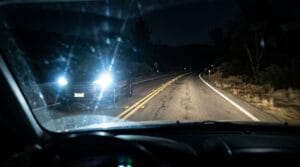
That rule does not mean every vehicle on the road in 2026 uses the same system. It also does not mean every AEB feature performs equally. Some systems work better at lower speeds. Others detect vehicles more reliably than pedestrians. Weather, glare, darkness, unusual road layouts, dirty sensors, blocked cameras, and poor calibration can all affect performance.
These limits matter because insurance companies may use the technology in whatever way helps their position. One adjuster may argue the crash could not have caused serious injuries because the vehicle had automatic braking. Another may claim the driver had no chance to avoid impact because the system failed to alert in time. A repair shop may also enter the dispute if sensor calibration or prior maintenance becomes important.
AEB Can Reduce Crashes, But Drivers Still Have Legal Duties
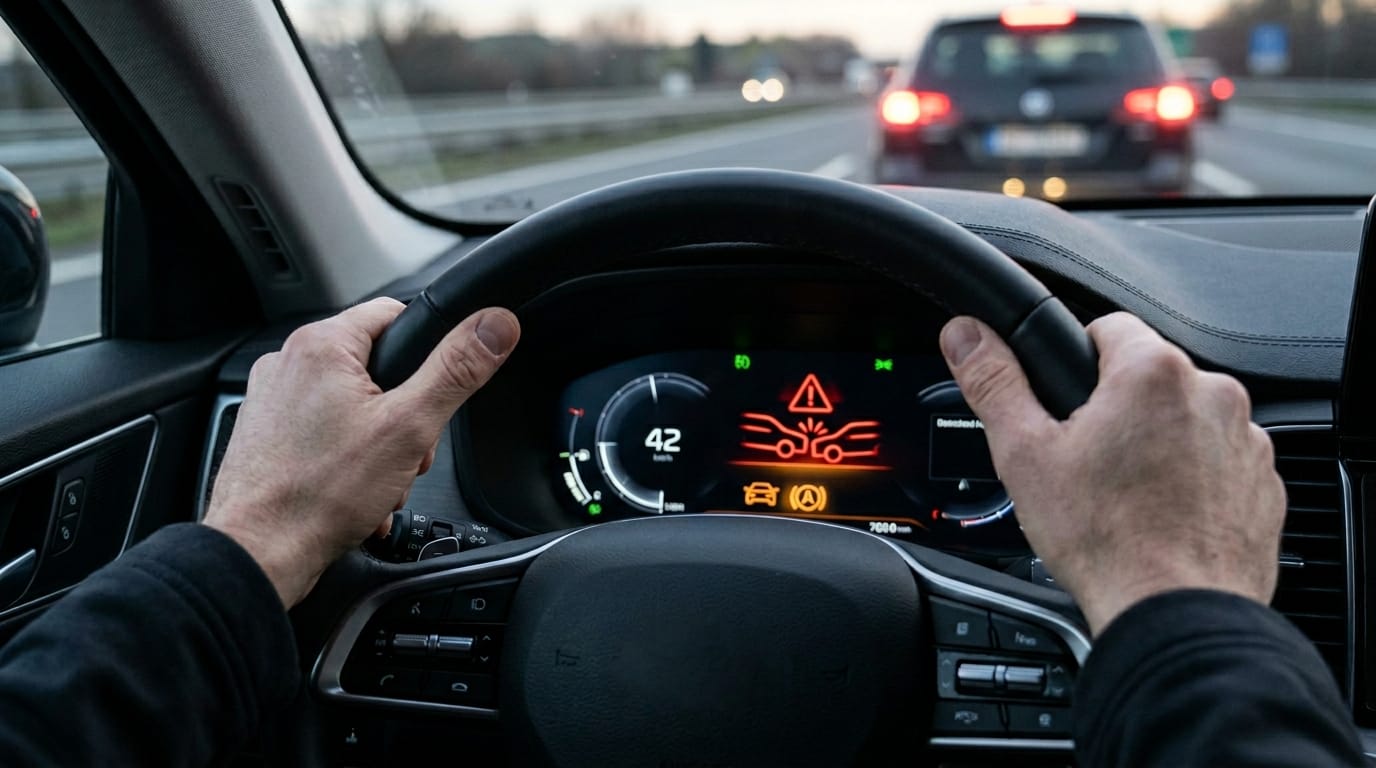
Automatic emergency braking helps reduce frontal crashes or lower impact speed when the vehicle cannot avoid a collision completely. The system may play an important role in rear-end crashes, stop-and-go traffic, school zones, crosswalks, and pedestrian-heavy areas. When the technology works correctly, it can prevent injuries or reduce crash severity.
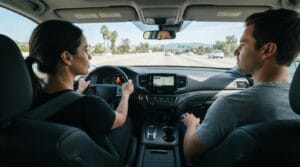
However, AEB does not turn a vehicle into a self-driving car. The driver must still watch the road, control speed, leave enough following distance, brake when necessary, and avoid distractions. When a driver rear-ends another vehicle while looking at a phone, the presence of AEB does not erase that unsafe behavior. In fact, it may create more questions about why the driver relied on technology instead of paying attention.
Overreliance Can Strengthen a Negligence Claim
Overreliance creates one of the biggest issues in automatic emergency braking accident claims. A driver may start trusting alerts too much. They may follow traffic closely because the vehicle has forward collision warning. They may delay braking because they expect the car to react first. Some drivers may also pay less attention near pedestrians because they believe pedestrian detection will catch every danger.
That conduct can support a negligence argument. The claim should examine not only whether the system activated, but also whether the driver acted reasonably before impact. Safety technology can help, but a driver who treats it as a substitute for attention can still cause serious harm.
System Limits Need a Real Investigation
AEB systems rely on cameras, radar, software, sensors, and calibration. Rain, fog, glare, darkness, road slope, debris, sensor obstruction, bumper damage, and previous repairs can all affect how the system responds. A vehicle that recently had front-end bodywork may also need sensor recalibration before the system works properly again.
Victims should not guess about these issues. A crash involving automatic braking may require scene photos, repair records, event data, dashcam footage, sensor inspection, and expert review. When the other driver repairs or sells the vehicle too quickly, key evidence can disappear before anyone evaluates the system.
Evidence That Matters After an AEB-Related Crash
Strong evidence drives automatic emergency braking accident claims. Victims should begin with the basics: medical care, police report information, scene photos, witness names, vehicle damage, repair estimates, and insurance documents. These records help create the foundation of the claim.
After that, the case may require deeper technical evidence. Did the driver receive a forward collision warning? Did the brakes activate before impact? Was the system on or off? Did the dashboard show a warning light? Did someone disable the feature? Did the driver mention that the car “should have stopped”? Small details from the crash scene can become important later.
Digital evidence can also help explain the timeline. Dashcam footage may show speed, distance, lane position, and reaction time. Vehicle data may show braking, throttle input, steering, and crash timing. Photos may reveal whether sensors had damage or blockage. Medical records then connect the crash to the victim’s injuries and treatment needs.
Pedestrian and Rear-End Crashes Need Fast Evidence Preservation
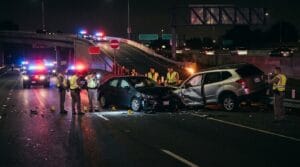
Pedestrian and rear-end crashes often require fast action because AEB evidence can disappear quickly. A pedestrian may not know whether the vehicle had automatic braking, but the grille, bumper, windshield camera area, or vehicle trim may provide clues. In a rear-end crash, damage patterns, skid marks, dashcam clips, and traffic conditions may show whether the driver reacted too late.
Video evidence can vanish within days. Dashcams may overwrite files. Businesses may delete security footage. Vehicle repairs may change sensor alignment. Normal repair work may also recalibrate or replace parts before anyone studies their condition after the crash. Injured victims should document the scene quickly and avoid relying only on the insurance company’s investigation.
How Victims Can Protect an Automatic Emergency Braking Accident Claim

Medical treatment should come first after any serious crash. Neck pain, back pain, headaches, dizziness, numbness, shoulder pain, knee pain, chest pain, and emotional distress deserve prompt attention. Some injuries appear right away, while others develop over several hours or days. Delayed treatment gives the insurer an opening to argue that the accident did not cause the injury.
Once the victim receives medical care, organized documentation becomes critical. Save medical bills, therapy notes, prescriptions, imaging results, repair estimates, rental receipts, and wage-loss records. Take photos of visible injuries. Keep a simple pain journal that explains symptoms, missed work, sleep problems, and daily limitations. When someone mentions vehicle safety technology at the scene, write down exactly what they said and who said it.
Who May Be Responsible When AEB Does Not Prevent a Crash?
In many cases, the at-fault driver remains the main responsible party. Distraction, speeding, tailgating, impairment, aggressive driving, and careless lane behavior can still cause a crash even when the vehicle has automatic braking. Safety technology does not excuse unsafe driving.
Some cases may involve additional parties. A repair shop may share responsibility if it failed to calibrate sensors after front-end work. A vehicle owner may face scrutiny if they ignored warning lights or skipped necessary repairs. A manufacturer may become relevant if evidence points to a defect, repeated system failure, or inadequate warnings. A fleet company may also matter when the vehicle operated for delivery, rideshare, or commercial transportation.
Insurance coverage can complicate the claim as well. If the at-fault driver carries limited insurance, the injured person may need to review underinsured motorist coverage. Accident Advocate’s article on California underinsured driver accident claims explains why one policy may not cover the full cost of medical bills, lost income, and pain after a serious crash.
The Strongest Claims Combine Driver Conduct and Technical Proof
The strongest automatic emergency braking accident claims combine human behavior with technical evidence. A good investigation asks what the driver did, how the vehicle responded, what road conditions existed, what the data shows, and how the injuries changed the victim’s life.
This balanced approach matters because insurers often oversimplify. They may blame the victim, blame the technology, minimize the injury, or call the crash unavoidable. A strong claim pushes back with facts from the scene, the vehicle, the medical records, and the digital evidence.
Automatic emergency braking can save lives, but it cannot replace responsible driving. When a driver causes harm despite having safety technology, the victim should not accept excuses without evidence. The better approach is to preserve vehicle evidence, document injuries, review available insurance, and investigate whether the driver, the system, or both played a role.
For an authority source on the federal AEB rule and its expected safety impact, readers can review the NHTSA automatic emergency braking final rule.