Many drivers hear that California’s minimum insurance limits went up and assume that accident victims are now much better protected. That sounds good on paper, but real injury claims are rarely that simple. In a serious crash, even a driver who technically carries legal insurance may still not have enough coverage to fully pay for the harm they caused. That is exactly why California underinsured driver accident claims 2026 are becoming such an important issue.
After a crash, most people focus on one question first: who caused it? That matters, but it is only part of the recovery picture. The next question is where the money will actually come from. Medical bills, lost wages, future treatment, pain and suffering, and property damage can add up fast. If the at-fault driver only carries minimum coverage, there is a real chance the policy will not stretch far enough.
This is where injured people get blindsided. They may assume that because the other driver was insured, the claim is straightforward. Then they find out that “insured” and “adequately insured” are not the same thing. A driver can meet the legal minimum and still leave an injured person with losses far above the available policy limits.
That is why it helps to understand how underinsured driver claims work in California, why the new minimums do not solve every problem, and what steps can protect the value of a case from the beginning.
Why 30/60/15 Still Leaves Many Victims Short
California’s current liability minimums are higher than they used to be, but they are still just minimums. They are not a promise that every injury claim will be fully covered. In fact, serious collisions can blow past those limits quickly, especially when there are multiple injured people, emergency treatment, or long-term medical problems involved.
Minimum limits are legal compliance, not full recovery

The numbers 30/60/15 sound larger than the old limits, but they still impose hard ceilings. The first number is the most available for one injured person. The second is the total available for everyone injured in the same crash. The third is for property damage. Once the policy runs out, the existence of liability coverage does not magically create more money.
Medical costs climb faster than people expect
A crash victim does not need catastrophic injuries for costs to rise fast. An ambulance ride, emergency room care, imaging, follow-up visits, medication, and physical therapy can create substantial bills in a short time. If surgery, specialist care, or missed work enter the picture, the case value may move far beyond the at-fault driver’s available coverage. That is why a crash with a legally insured driver can still function like a coverage problem from the victim’s point of view.
In practical terms, this means the insurance company for the at-fault driver may admit liability and still not have enough money to make the injured person whole. That gap between losses and available insurance is the real issue in underinsured driver cases.
Multi-victim crashes split limited coverage fast
The problem gets even worse when more than one person is hurt. The per-accident limit has to be shared among all injured claimants. If two, three, or four people are injured in the same collision, the total pool may be exhausted quickly. A person with a serious injury may end up competing against other claims for a slice of limited coverage.
This is one reason a crash that looks ordinary from the outside can turn into a major insurance dispute underneath. Fault may be obvious, but the amount of available coverage can still be nowhere near enough for everyone involved.
UM/UIM is the overlooked coverage that changes the claim
When people think about insurance after a crash, they often focus only on the other driver’s policy. That is a mistake. In California, uninsured and underinsured motorist coverage can become one of the most important parts of the recovery strategy when the at-fault driver lacks enough insurance to cover the full loss.
What UM does after no-insurance or hit-and-run crashes
Uninsured motorist coverage generally applies when the at-fault driver has no liability insurance at all, or in some situations where the driver cannot be identified, such as a hit-and-run. If that sounds familiar, it connects naturally with What to Do After a Hit-and-Run: Essential Steps for Protecting Your Claim. In those situations, your own policy may become the practical path to recovery instead of the other driver’s missing policy.
That matters because an uninsured driver often does not have meaningful assets either. Even if you could sue them personally, collecting enough money to cover a serious injury may be unrealistic. UM coverage can help bridge that problem.
What UIM does when minimum coverage is not enough
Underinsured motorist coverage is different. It comes into play when the at-fault driver does have insurance, but not enough to pay the full value of the claim. This is where many California underinsured driver accident claims 2026 cases will live. The claim starts against the other driver’s policy, then attention turns to whether your own UIM coverage may help cover the remaining uncompensated losses.
That does not mean the process is automatic. Insurance companies may dispute the severity of the injury, the value of the case, or whether your damages truly exceed the other driver’s limits. But if your policy includes UIM protection, it can become a key piece of the recovery strategy.
What To Do After an Underinsured Driver Crash in 2026
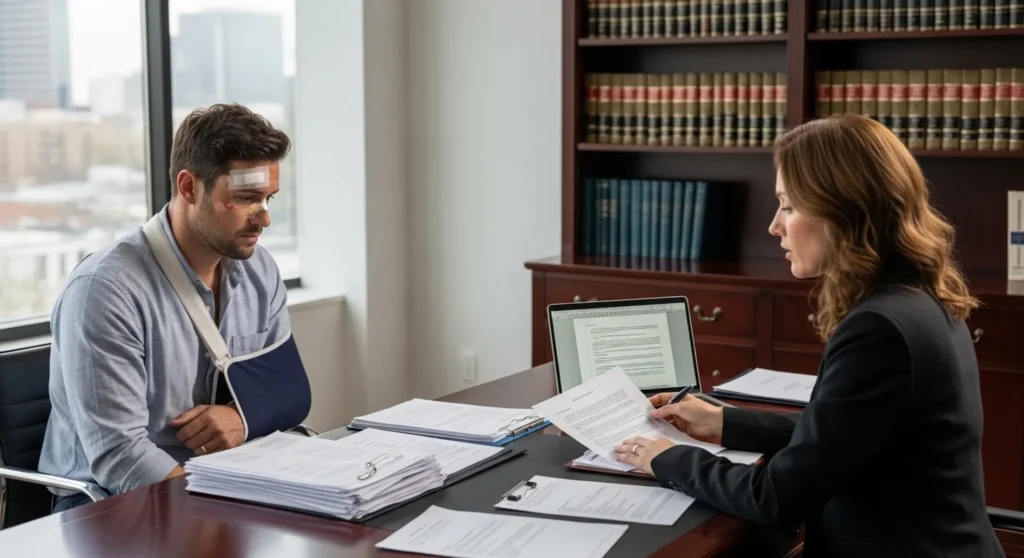
The smartest move after this kind of crash is to think beyond the other driver’s insurance card. The early steps you take can determine whether important coverage is found, whether evidence is preserved, and whether the case is positioned for a stronger recovery later.
The steps that protect the value of the case
Start with medical care. Get evaluated promptly and follow through with treatment. Even aside from your health, medical records help establish what injuries were caused by the collision and how serious they are. That documentation can directly affect both the liability claim and any later UM/UIM claim.
Next, preserve the basic crash evidence. Take photos of vehicle damage, injuries, roadway conditions, debris, traffic controls, and anything else that may help explain what happened. Get the police report number. Gather witness names and contact information if you can. Save repair estimates, receipts, and every insurance letter you receive.
Then review your own policy, not just the other driver’s. Look at the declarations page and confirm whether you carry UM/UIM coverage. Many people do not know what is in their policy until after a crash. That is a problem because coverage decisions should be based on actual policy language, not guesswork.
If the crash involved an Uber or Lyft vehicle, you should also look at Rideshare Accident Claims in 2025: What Every Victim Needs to Know, because rideshare cases can add another layer of insurance complexity. If phone distraction may have played a role, 2026 Distracted Driving Crackdowns is another natural internal link.
Do not rush into a quick settlement just because the at-fault insurer offers policy limits early. Policy-limits offers can sound attractive, but accepting one without understanding the full medical picture and your own available coverage can leave money on the table. A serious injury case should be evaluated with the full insurance stack in mind.
You should also keep the bigger compensation picture in view. A claim is not just about current hospital bills. It can include future treatment, lost earnings, reduced earning capacity, and non-economic harm. That is why this article also fits well with How to Maximize Your Personal Injury Claim Settlement. The strongest results usually come from treating the claim like a full financial case, not a quick reimbursement request.
Finally, do not confuse an underinsured driver case with a weak case. These are not the same thing. Sometimes liability is strong and damages are serious, but the available insurance is the real obstacle. In those situations, identifying every policy and preserving every category of proof matters more than ever.
A California underinsured driver accident claim in 2026 is really about one thing: closing the gap between what the crash cost you and what the at-fault driver’s policy can actually pay. The newer 30/60/15 limits helped somewhat, but they did not eliminate that gap. For many injured people, that means UM/UIM coverage is still one of the most important protections on the page.
For a trustworthy consumer explanation of California auto insurance, including UM/UIM coverage, see the California Department of Insurance auto insurance guide.