A California pedestrian crosswalk accident can happen in a place that should feel safe. A person steps into a crosswalk. A driver turns, speeds, looks at a phone, or fails to yield. In seconds, the pedestrian can suffer serious injuries.
Crosswalk claims are getting more attention in 2026 because of California’s daylighting law. The rule limits parking near marked and unmarked crosswalks. The goal is simple. Drivers and pedestrians need a clear view of each other before someone enters the street.
A California pedestrian crosswalk accident may involve more than a careless driver. The case may also involve blocked visibility, poor lighting, unsafe parking, distracted driving, speed, confusing intersections, or missing signs. That is why these claims need a careful review from the start.
Why Crosswalk Accident Claims Are Changing in California
Pedestrian safety has become a major California traffic issue. Pedestrians do not have seat belts, airbags, or a vehicle frame to protect them. Even a low-speed impact can cause fractures, head injuries, back injuries, knee trauma, and long-term pain.
Crosswalk crashes can also create unfair blame. Insurance companies may say the pedestrian walked too fast, crossed outside the lines, or entered the road suddenly. Those arguments should not be accepted without proof.
The Daylighting Law Can Affect Visibility Disputes
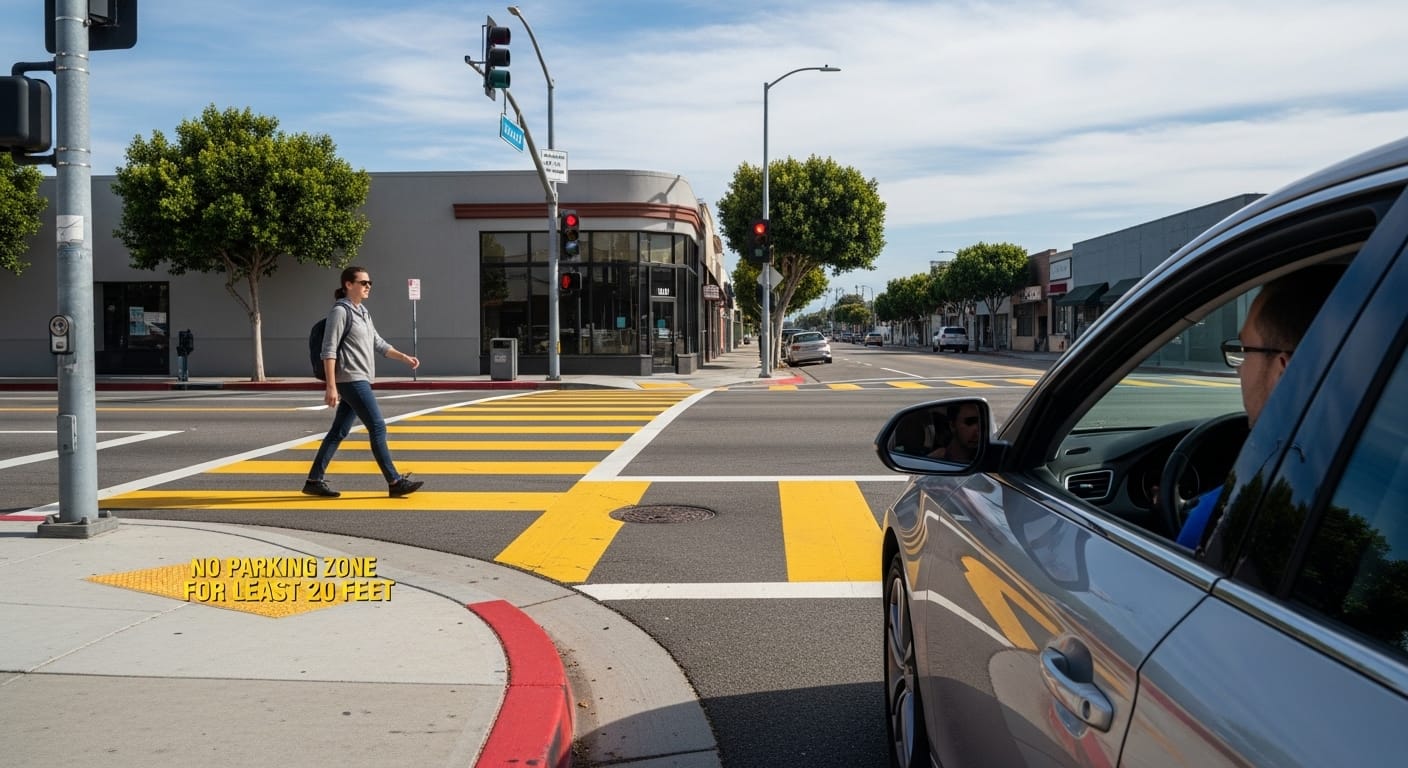
California’s daylighting law focuses on visibility near crosswalks. It restricts parking close to the approach side of marked and unmarked crosswalks. This helps pedestrians see approaching vehicles. It also helps drivers see people before they enter the road.
That visibility issue can matter after a crash. A driver may claim the pedestrian appeared out of nowhere. A pedestrian may say a parked vehicle blocked the view. Photos, video, witness statements, and the position of parked cars can help show what really happened.
In a California pedestrian crosswalk accident, investigators may look at whether a vehicle parked too close to the crosswalk. They may also review curb markings, traffic signs, signal timing, street lighting, and the driver’s approach direction.
Unmarked Crosswalks Still Matter
Many people think a crosswalk only exists when white lines appear on the road. That is not always true. California intersections may include unmarked crosswalks where sidewalks continue across the street.
This matters because drivers still need to watch for pedestrians. A driver cannot assume that a pedestrian has no protection just because the crosswalk has no paint. The facts still matter.
After a crash, victims should document the intersection. Photos should show sidewalks, corners, traffic lights, stop signs, curb ramps, parked vehicles, and the pedestrian’s path. These details may help prove that the crossing area was predictable.
Blocked Visibility Can Shift the Fault Analysis
Blocked visibility is one of the biggest issues in pedestrian claims. A parked SUV, delivery van, bus, landscaping, utility truck, or construction barrier can hide a pedestrian from a driver. It can also hide the driver from the pedestrian.
A driver may argue that they had no time to react. That statement does not end the case. The better question is whether the driver should have slowed down because the view was blocked.
A careful driver should approach crosswalks with caution. This is especially true near schools, transit stops, shopping areas, apartment buildings, parks, and busy intersections. When visibility is poor, drivers should expect pedestrians and prepare to stop.
Driver Distraction Can Make Crosswalk Crashes Worse
Phone use and screen distraction can turn a visibility problem into a crash. A driver who looks down for a few seconds may miss a pedestrian waiting at the curb. They may also miss a person already crossing.
Distracted driving evidence may include phone records, app activity, dashcam footage, witness statements, or video from nearby businesses. In serious cases, digital evidence can become very important.
This topic connects well with Accident Advocate’s post on 2026 distracted driving crackdowns. Crosswalk crashes often involve the same problem: a driver failed to pay attention when the road required extra care.
How Victims Can Protect a California Pedestrian Crosswalk Accident Claim
After a pedestrian crash, medical care comes first. Call 911 if anyone is hurt. Do not try to walk off serious pain. Pedestrian injuries can worsen after the shock fades.
Once the victim is safe, evidence matters. Crosswalk scenes change quickly. Vehicles move. Witnesses leave. Video may disappear. Curbside parking may look different the next day.
Save Evidence Before the Scene Changes
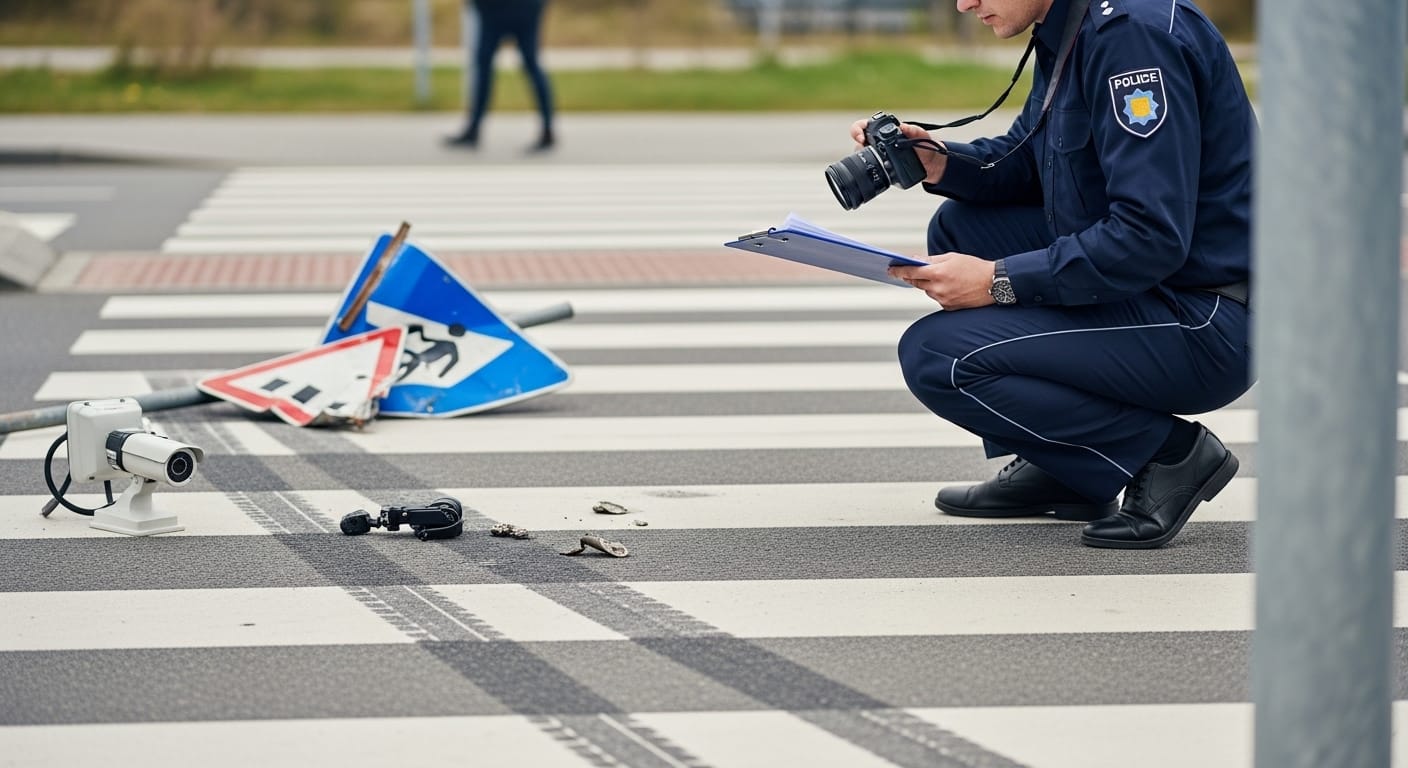
Useful evidence may include the police report, witness names, photos, video footage, traffic citations, medical records, and insurance information. Scene photos should show the crosswalk, vehicle damage, skid marks, debris, curb markings, traffic signs, signals, lighting, and nearby cameras.
Victims or family members should take photos from the driver’s viewpoint. They should also take photos from the pedestrian’s viewpoint. This can help show whether parked cars, signs, or other objects blocked the view.
Nearby cameras may also help. Stores, homes, buses, rideshare vehicles, delivery trucks, and dashcams may record the impact or the moments before it. Victims should act quickly because many systems delete old footage within days.
Medical Records Help Prove the Injury Claim
Medical records connect the crash to the injuries. They also show the treatment plan, pain levels, work limits, therapy needs, and future care. Victims should keep emergency records, imaging results, prescriptions, referrals, therapy notes, receipts, and mileage logs.
Common injuries may include broken bones, concussions, spinal injuries, shoulder injuries, knee injuries, internal injuries, cuts, scarring, and emotional trauma. Some victims also develop fear of crossing streets after the crash.
Prompt treatment matters. If a victim delays care, the insurance company may argue that the injuries were minor or unrelated. That argument can reduce the value of a valid claim.
Insurance Adjusters May Try to Blame the Pedestrian
Insurance adjusters may call quickly after the crash. They may ask whether the pedestrian looked both ways. They may ask whether the pedestrian used a phone. They may also ask whether the pedestrian crossed outside the marked lines.
Victims should avoid guessing. A simple statement can cause problems later. Saying “I did not see the car” may sound like an admission, even when the driver was speeding or distracted.
A California pedestrian crosswalk accident may involve several legal issues. The driver may hold responsibility. A vehicle owner, employer, rideshare company, delivery company, or public entity may also matter in some cases.
If the crash involved a stopped vehicle, roadside hazard, or emergency situation, readers can review Accident Advocate’s guide on California move-over law accident claims. Readers can also visit the Car Accident Injury Lawyer page for broader claim guidance.
The bottom line is clear. Crosswalks are not just painted lines. They are safety zones where drivers must watch for people. When a driver speeds, looks at a phone, ignores a pedestrian, or fails to adjust for blocked visibility, the result can be life-changing.
A California pedestrian crosswalk accident claim should focus on visibility, driver behavior, parking near the crosswalk, medical records, video evidence, and insurance coverage. With the right evidence, victims can challenge unfair blame and pursue compensation based on facts.
For additional authority, readers can review California daylighting law information from CityofSanMateo.org, pedestrian safety statistics from OTS.ca.gov, and national pedestrian safety data from NHTSA.gov.