California move over law accident claims matter more in 2026 because California changed the roadside safety rule in a way many drivers still do not fully understand. For years, most people linked the move-over requirement to police cars, ambulances, fire engines, and tow trucks. That is no longer the full picture. The rule now reaches any stationary vehicle displaying hazard lights or another warning device, which means ordinary drivers stranded on the roadside now fit more clearly into the legal analysis after a crash.
That change matters because roadside accidents are often far more violent than they look on paper. A driver may pull to the shoulder with a flat tire. A family may stop after smoke starts coming from the engine. A rideshare vehicle may be disabled after a minor collision. In each of those situations, the people outside or beside the vehicle have almost no protection. If another driver barrels past without slowing down, fails to change lanes, or drifts into the shoulder, the result can be catastrophic.
This is exactly why California move over law accident claims deserve their own discussion. These cases are not just about a broken-down car. They are about visibility, reaction time, driver attention, comparative fault, and whether a passing motorist ignored a now-broader duty to use caution. In 2026, that duty matters more because the law speaks more directly to everyday roadside danger than it did before.
Why California Move Over Law Accident Claims Matter More in 2026
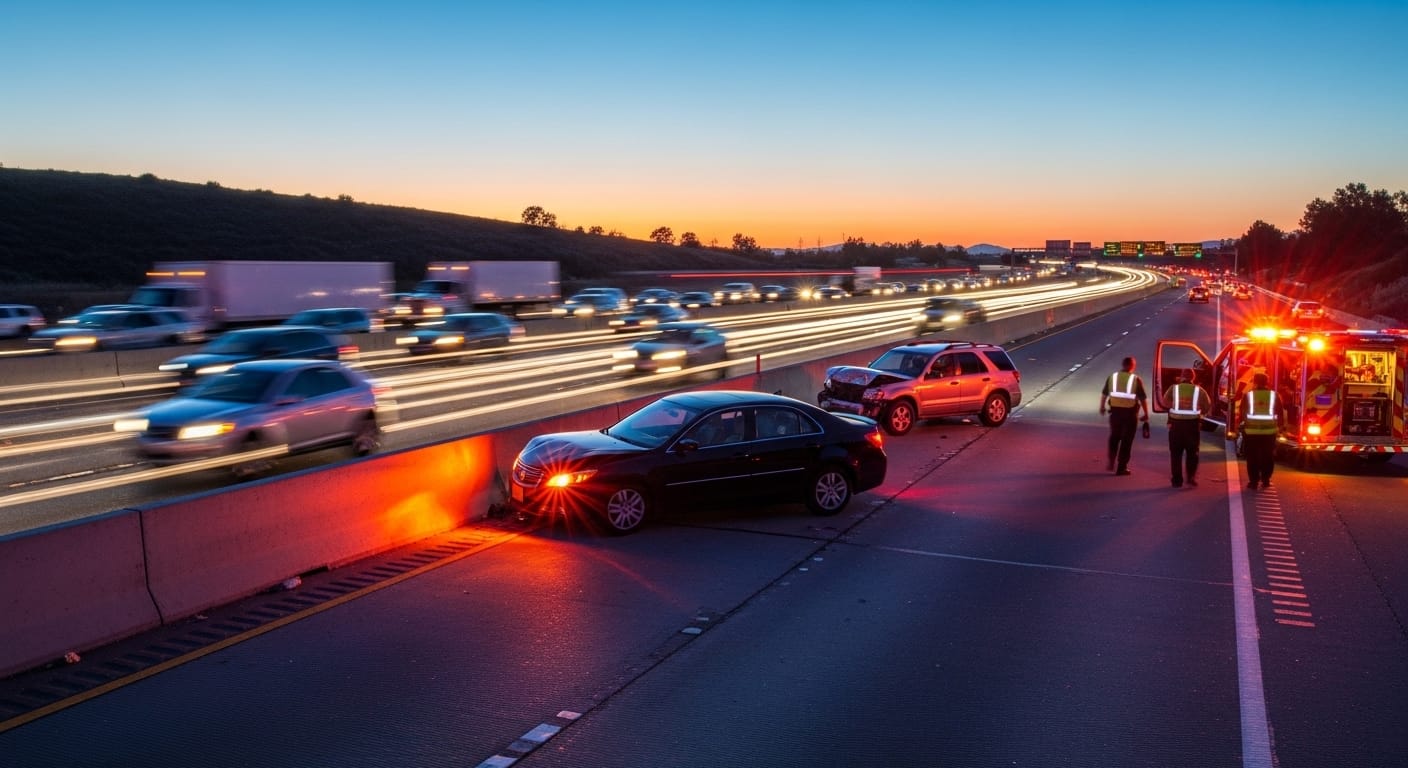
California move over law accident claims matter more now because the roadside duty is broader, clearer, and harder for insurers to brush aside. Before this expansion, many drivers thought the law only applied when they saw flashing emergency lights from police, tow trucks, or highway crews. In practice, that left too many stranded drivers and passengers in a legal gray area. Now, when a vehicle sits on the roadside with hazard lights or another warning device, the passing driver has a more obvious obligation to respond carefully.
What changed in 2026
The practical shift is simple but important. A driver approaching a stationary vehicle with hazard lights, cones, flares, or other warning devices may need to move over if it is safe and legal to do so. If moving over is unsafe or impracticable, that driver must slow to a reasonable and prudent speed for the conditions. That gives injured victims a stronger framework for explaining why the passing motorist should have reacted differently before the impact happened.
Why hazard lights now matter more in liability arguments
Hazard lights do not make a stopped vehicle magically safe. They also do not excuse every decision a stranded driver makes. But they matter because they help show that the roadside danger was visible. If a disabled car had hazards on, reflective devices out, or some other clear warning sign, the defense has a harder time claiming the scene gave no notice. In many cases, that shifts the argument away from “the crash was unavoidable” and toward “the passing driver had a visible reason to slow down or create space and failed to do it.”
Why the law also sharpens the evidence story
This legal change does something else that matters in real cases: it makes scene evidence more valuable. Photos of hazard lights, lane position, cones, flares, shoulder width, weather, and sight lines can now carry even more weight. The same is true for dashcam footage and witness statements. A stronger legal duty means better roadside evidence can translate more directly into a stronger claim.
Why roadside crashes turn severe so quickly
Roadside crashes often cause devastating harm because the victim may be standing outside the car, leaning into the trunk, talking to a tow operator, or helping a passenger when the impact happens. In many of those cases, the force does not hit a vehicle first. It hits a person. That is why shoulder-side crashes can lead to brain injuries, pelvic fractures, crushed limbs, spinal trauma, and wrongful death even when the property damage does not look extreme at first glance.
These cases are also dangerous because they often happen on roads where drivers are already moving fast, following too closely, or glancing at phones. That makes this topic a natural fit with your distracted-driving article. A motorist who ignores a visible roadside warning may also have been distracted, fatigued, impaired, or simply not paying attention to obvious danger.
How Fault, Insurance, and Compensation Work After a Move-Over Crash
Most California move over law accident claims still rise or fall under ordinary negligence rules. The injured person must show what the other driver did wrong, how that conduct caused the injury, and what losses followed. But the expanded move-over rule can strengthen that argument. A victim may now frame the case not just as speeding, drifting, or careless driving, but as a failure to follow a specific roadside safety duty near a visibly stopped vehicle.
Who may be at fault and what victims still need to prove
The passing driver is often the main defendant, but not always the only one. Another vehicle may have forced the striking driver toward the shoulder. A commercial vehicle may have created the hazard. A rideshare driver may have stopped unsafely after a prior incident. In some cases, the stranded driver’s own decisions will also come under review, especially if there was a safer place to stop and they ignored it. California comparative fault rules can reduce recovery if the victim shares blame, but they do not automatically erase the claim.
That is why these cases need careful framing. Insurers love to argue that the stranded person “shouldn’t have been there.” Sometimes they also say the victim exited the car too soon, stood too close to traffic, or failed to set out warnings. Those arguments can matter. But they do not wipe out the duty of an approaching motorist to react safely to a visible roadside emergency. A strong claim separates those issues instead of letting the defense blur them together.
Evidence that can make or break the claim
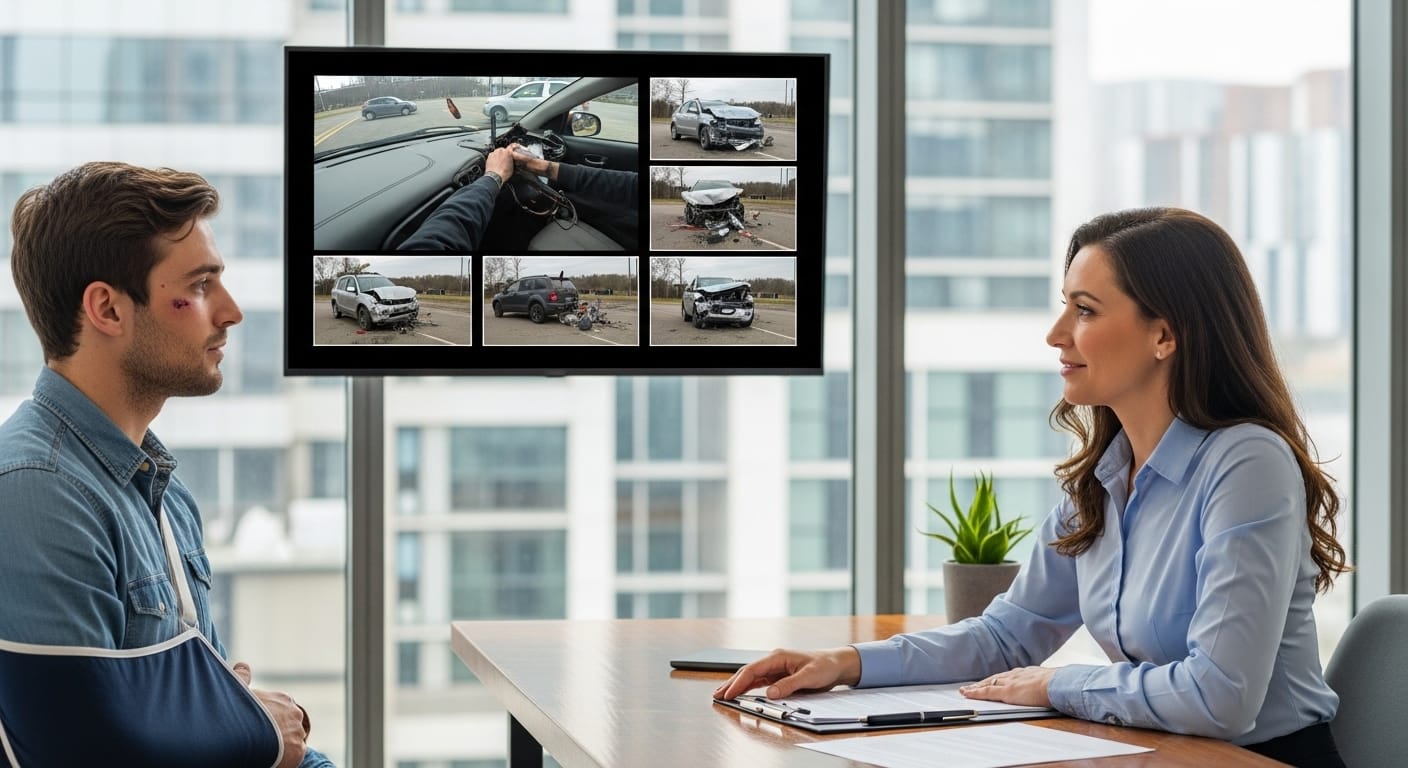
These cases are won through proof, not sympathy. Photos of the shoulder, final vehicle positions, damage angles, warning devices, skid marks, and debris patterns all matter. Dashcam footage can be even stronger. Witnesses can help establish speed, lane drift, distraction, or whether the striking driver had room to move over. Phone records may become important if a distraction is suspected. If the at-fault driver flees, your newer and older hit-and-run posts become especially relevant internal links because the evidence race gets harder fast.
Insurance coverage also deserves close attention. A roadside crash can involve a driver with too little insurance, which is why this article pairs well with your underinsured-driver post. Victims often assume the new law means their recovery will be straightforward. It will not if the at-fault policy is thin, liability is contested, or multiple vehicles are involved.
What victims should do right away
First, get medical care. Do not brush off symptoms just because you stayed on your feet after the impact. Second, preserve the scene as aggressively as possible. Photograph the warning setup before anything changes. Save dashcam footage, tow receipts, repair estimates, emergency-room records, and witness contacts. Third, avoid giving a long recorded statement before you understand how the crash happened and what insurance applies. Fourth, do not assume the police report will capture every detail that matters. In roadside cases, little facts often control big outcomes.
The bottom line is simple. California move over law accident claims matter more in 2026 because California made the roadside duty broader and easier to understand. That does not mean every roadside case becomes an automatic win for the injured person. It does mean many victims now have a stronger way to show that the other driver should have slowed down, moved over, or exercised far more caution than they did. On crowded California roads, that can make a real difference in how fault is argued and how compensation gets valued.
For readers who want the official rule, the best authority source is the California DMV’s 2026 new laws summary, along with California Vehicle Code section 21809.