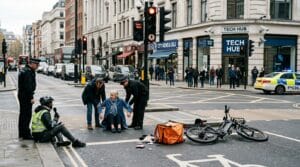
A food delivery e-bike accident claim can become complicated fast. One moment, a pedestrian is crossing the street, a driver is pulling out of a parking space, or a cyclist is using a bike lane. The next moment, a delivery rider on an electric bike enters the scene at speed, crashes, and leaves everyone asking the same question: who is responsible?
In 2026, food delivery e-bikes are a normal part of city traffic. They help riders complete more orders, move through congested streets, and avoid fuel costs. But when riders rush, use sidewalks, ignore red lights, travel the wrong direction, carry heavy delivery bags, or ride powerful devices in crowded areas, the risk of serious injury increases. Pedestrians, drivers, cyclists, and even the riders themselves can suffer broken bones, head injuries, back injuries, knee trauma, dental injuries, and long-term pain.
A food delivery e-bike accident claim may involve the rider, a delivery app, a restaurant, a vehicle driver, a property owner, a device manufacturer, or an insurance company. It may also involve a hit-and-run if the rider leaves before police arrive. The challenge is that many delivery riders are classified as independent contractors, and not every crash has obvious insurance coverage.
This guide explains how victims can think through fault, evidence, insurance, delivery app records, and compensation after an e-bike delivery crash. It is written for general education only and is not legal advice. Accident laws, worker classifications, and insurance rules vary by state, so injury victims should speak with a qualified local attorney about their specific case.
Why Food Delivery E-Bike Accident Claims Are Increasing
Food delivery has changed street traffic. In many cities, delivery riders are constantly moving between restaurants, apartments, office buildings, hotels, campuses, and entertainment districts. They often ride during lunch rush, dinner rush, late nights, rain, and low-light conditions. That means they share space with pedestrians, parked cars, rideshare vehicles, buses, cyclists, and distracted drivers.
E-bikes are not the same as ordinary bicycles. They can accelerate quickly, move quietly, and carry more weight when a rider has a large insulated delivery bag. Some devices are legal pedal-assist e-bikes. Others may be modified, too powerful, or closer to electric motorcycles. That difference can matter after a crash because speed, braking distance, device classification, and permitted riding location may affect fault.
For broader safety context, readers can review the U.S. Consumer Product Safety Commission micromobility safety resource. CPSC tracks injuries and deaths involving e-bikes, e-scooters, and similar devices. Those statistics support what many cities are already seeing: micromobility crashes are no longer rare side issues.
Delivery Pressure Can Affect Rider Behavior
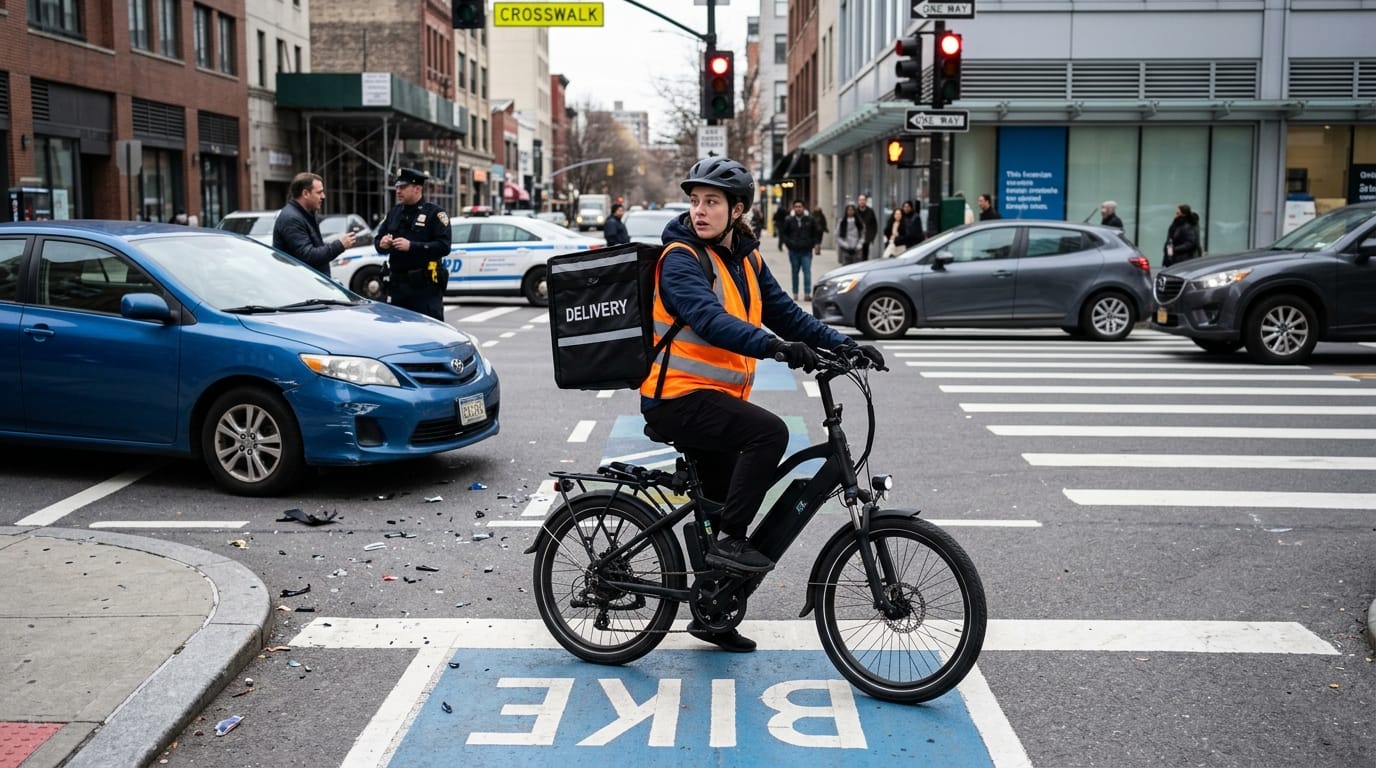
Food delivery riders are often under time pressure. A late order can mean a bad rating, reduced tips, fewer future orders, or lower earnings. That pressure does not excuse unsafe riding, but it can explain why some crashes happen. A rider may hurry through an intersection, cut across a sidewalk, pass between vehicles, ignore a stop sign, or focus on the delivery app instead of the road.
In a food delivery e-bike accident claim, investigators may ask what the rider was doing before impact. Was the rider actively delivering an order? Rider logged into an app? Was the rider following GPS directions? Is the rider looking at the phone? The rider carrying food, drinks, or a delivery bag that affected balance? These details can help show whether the rider failed to use reasonable care.
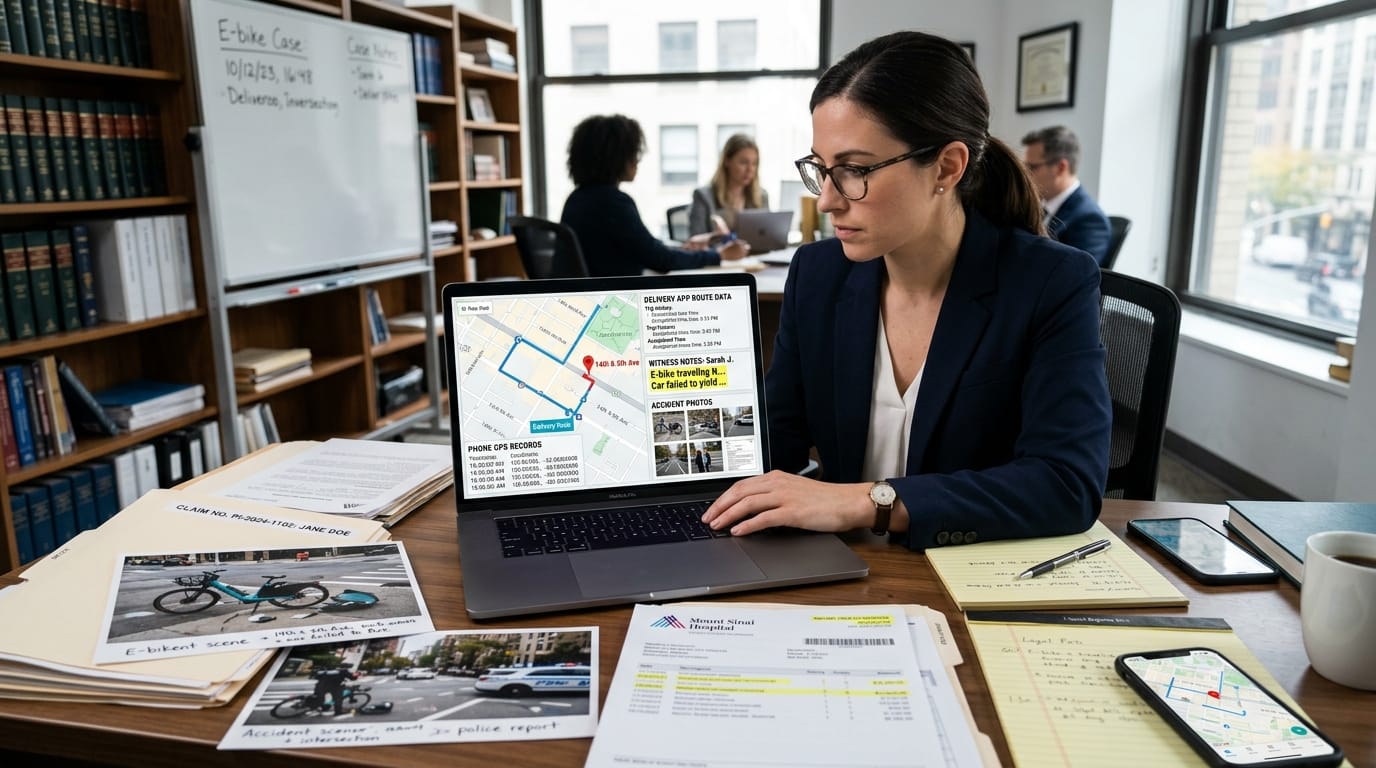
Phone records, delivery app activity, GPS location, route history, order timing, witness statements, dashcam footage, and nearby security video may all become important. A simple crash scene can quickly turn into a digital evidence case.
Sidewalk Riding Can Create Pedestrian Injury Risks
Sidewalk riding is one of the biggest issues in delivery e-bike crashes. Pedestrians do not expect a fast electric bike to approach from behind, pass close to a storefront, or enter a crosswalk from the sidewalk. Older adults, children, tourists, and people carrying bags may have little time to react.
If a pedestrian is hit on a sidewalk or in a crosswalk, the claim should focus on location, speed, visibility, and right of way. Photos should show the sidewalk width, storefronts, curb ramps, crosswalk markings, signs, nearby cameras, and traffic signals. If the crash happened at a crosswalk, Accident Advocate’s guide on California pedestrian crosswalk accident claims may help readers understand how visibility and driver or rider behavior can affect fault.
Heavy Delivery Bags May Affect Balance And Stopping
A large delivery backpack may look harmless, but it can affect balance, turning, and stopping. A rider carrying hot drinks, multiple orders, or a heavy insulated bag may have less control during sudden braking. If the rider is also moving fast, riding downhill, or weaving through traffic, the risk becomes worse.
After a crash, victims should document the bag, cargo, bike, tires, brakes, lights, phone mount, and any visible modifications. These details may help explain why the rider could not stop in time or why the impact caused serious injury.
Who May Be Liable After A Delivery E-Bike Crash?
Liability depends on the facts. In many cases, the rider is the first person investigators examine. A rider may be responsible if they were speeding, distracted, riding in the wrong place, failing to yield, ignoring traffic signs, or operating an unsafe device. But the claim should not stop there.
A delivery platform may become relevant if app records show the rider was actively completing an order. The platform’s responsibility may depend on state law, contract terms, insurance coverage, control over the rider, safety policies, background checks, and whether the platform provided or required certain equipment. These issues are not simple. Some companies argue that riders are independent contractors and that the company is not responsible for the rider’s conduct. Victims should not accept that answer without reviewing the full facts.
A restaurant may be involved in limited situations, especially if it directly hired the rider or controlled the delivery. A vehicle driver may share fault if the driver opened a car door, turned across a bike lane, failed to yield, or forced the e-bike into a pedestrian. A city or property owner may be relevant if poor lighting, unsafe road design, blocked visibility, or dangerous construction contributed to the crash.
Device sellers, repair shops, or manufacturers may also matter if the e-bike had defective brakes, a throttle problem, battery issue, controller failure, unsafe modification, or misleading product classification. Accident Advocate’s article on California e-motorcycle accident claims explains why the type of electric device can change the legal analysis.
Delivery App Records Can Help Prove Timing
Timing matters in a food delivery e-bike accident claim. If the rider was logged into a delivery app, accepted an order, picked up food, or was traveling toward a customer, that information may help identify potential insurance and liability issues.
Useful evidence may include app route data, pickup time, delivery deadline, GPS pings, order screenshots, customer messages, rider communications, and payment records. The victim may not be able to access this information alone. An attorney may need to send preservation letters quickly so relevant data is not deleted or overwritten.
Hit-And-Run Delivery E-Bike Crashes Need Fast Evidence
Some riders leave the scene after a crash because they are scared, uninsured, using someone else’s app account, riding an illegal device, or worried about losing work. When that happens, the victim should act quickly. A food bag, restaurant receipt, order label, nearby restaurant camera, customer delivery record, or witness photo may help identify the rider.
Victims should call police, get medical care, photograph the scene, write down the delivery bag color or markings, and ask nearby businesses to preserve footage. If the rider cannot be identified, the claim may involve the victim’s own insurance depending on the crash type and policy language. Accident Advocate’s guide on hit-and-run accident claims gives more background on why fast evidence preservation matters.
How Victims Can Protect A Food Delivery E-Bike Accident Claim
The first priority after any crash is safety and medical care. Call 911 if anyone is injured. Do not assume the injury is minor because the vehicle was an e-bike. Electric bikes can cause serious harm, especially when they strike pedestrians, children, older adults, or drivers standing outside a vehicle.
Medical records are the foundation of the injury claim. Emergency room notes, imaging, prescriptions, specialist referrals, therapy records, work restrictions, and follow-up care help connect the injury to the crash. Insurance companies often use delayed treatment as an excuse to argue that the injury was unrelated or not serious.
After medical care, evidence becomes the priority. Victims should take photos of the e-bike, delivery bag, rider, crosswalk, sidewalk, bike lane, vehicle damage, injuries, road surface, skid marks, traffic signals, signs, lighting, weather, and nearby cameras. Witness names and phone numbers are extremely important because delivery riders and app companies may dispute what happened.
Victims should also avoid giving quick recorded statements to insurance adjusters. The adjuster may ask whether the pedestrian stepped out suddenly, whether the driver checked mirrors, or whether the victim saw the rider in time. Guessing can create problems. It is better to say the investigation is ongoing and wait until the evidence is reviewed.
Insurance Coverage May Not Be Obvious
Insurance is one of the hardest parts of a food delivery e-bike accident claim. A rider may not have auto insurance that applies to an e-bike. A homeowner or renter policy may exclude business activity or motorized devices. A delivery platform may have limited coverage, conditional coverage, or no coverage depending on the rider’s status at the exact time of the crash.
If a vehicle driver was also involved, that driver’s auto policy may matter. The crash involved a dangerous road condition, and a public entity deadline may apply. The device malfunctioned; a product claim may involve a manufacturer or seller. If the rider fled, the victim may need to review uninsured or underinsured coverage. Accident Advocate’s article on California underinsured driver accident claims explains why one insurance source may not fully cover serious losses.
The bottom line is direct. Do not assume there is no claim just because the rider was on an e-bike. Also do not assume the delivery app is automatically responsible. These cases require a careful review of rider conduct, app status, insurance language, device classification, crash location, and available video evidence.
A strong food delivery e-bike accident claim starts with fast action. Get medical care. Preserve photos and video. Identify witnesses. Save delivery details. Look for nearby cameras. Do not let the rider, app company, insurer, or anyone else reduce the case to a simple “bike accident” if the facts show a more serious safety failure.