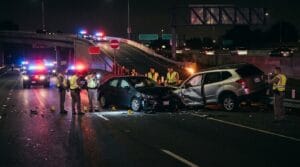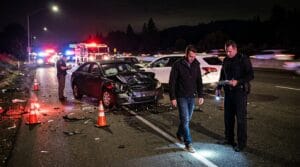
A California wrong-way claim can involve severe injuries, disputed evidence, and urgent insurance questions. Wrong-way crashes often happen fast. A driver may enter a freeway from an off-ramp, travel against traffic, cross lanes, or collide head-on before other drivers have time to react. When that happens, the damage can be devastating.
These crashes may involve alcohol, drugs, confusion, poor lighting, unclear ramps, distracted driving, medical emergencies, or stolen vehicles. In many cases, the injured person did nothing wrong. They were simply driving in the correct direction when another vehicle came toward them.
The legal claim may focus on more than the final impact. Investigators may need to know where the wrong-way driver entered, how long they traveled against traffic, whether signs were visible, whether the driver was impaired, and whether vehicle data can prove speed or braking before the crash.
This article is for educational purposes only and is not legal advice. Every accident claim depends on the facts, injuries, insurance coverage, evidence, and deadlines.
Why Wrong-Way Crashes Create Serious Injury Claims
Wrong-way crashes are dangerous because they often create head-on or near head-on impacts. Both vehicles may move toward each other at highway speed. That can multiply the crash force and leave victims with brain injuries, spinal trauma, broken bones, internal injuries, burns, amputations, or fatal injuries.
In a normal lane-change crash, the vehicles may sideswipe or collide at an angle. In a wrong-way crash, drivers may have only seconds to identify the danger and react. Evasive action may not be possible, especially at night or on a curved freeway section.
Wrong-way claims also create unique proof issues. The victim may need to prove the other driver entered from a specific ramp, ignored signs, traveled against traffic, and caused the impact. That proof can come from police reports, 911 calls, traffic cameras, dashcams, black box data, witness statements, and vehicle damage.
Freeway ramps often become the starting point
Many wrong-way investigations begin at the ramp. A driver may enter through an off-ramp instead of an on-ramp. The crash may happen far from that entry point, but the ramp still matters because it can show how the danger began.
Ramp evidence may include “Do Not Enter” signs, “Wrong Way” signs, pavement arrows, lighting, lane markings, median layout, curb design, and sightlines. If signs were missing, blocked, faded, knocked down, or poorly placed, the investigation may become more complex. The wrong-way driver may still bear responsibility, but the road design may need review too.
For official roadway-safety background, the Federal Highway Administration explains wrong-way driving countermeasures involving interchanges, exit ramps, signs, markings, lighting, and channelization. Readers can review FHWA’s material here: FHWA wrong-way driving countermeasures.
Ramp photos should show what the driver could see
Scene photos should not stop at the crash location. Take photos of the suspected ramp, signs, lane arrows, lighting, road geometry, nearby businesses, shoulders, medians, and camera locations. If the crash happened at night, nighttime photos may show the scene better than daytime photos.
When possible, photograph the driver’s approach path. A ramp may look obvious from one direction but confusing from another. Photos can help show whether the wrong-way driver ignored clear warnings or entered through a confusing roadway layout.
Impairment can change the entire claim
Alcohol and drug impairment often appear in wrong-way crash investigations. An impaired driver may miss signs, enter the wrong ramp, drive against traffic, and fail to react to headlights coming toward them. If police suspect DUI, the civil injury claim should preserve that evidence.
Your article on California DUI Crash Claims in 2026 is a useful internal link here. DUI evidence can affect fault, settlement pressure, and possible punitive damages arguments in severe crash cases.
Black box and camera evidence can prove the crash sequence
Wrong-way cases often depend on timing. Investigators may need to know when the driver entered the freeway, how fast each vehicle traveled, when braking began, whether steering changed, and whether the victim had any chance to avoid the impact.
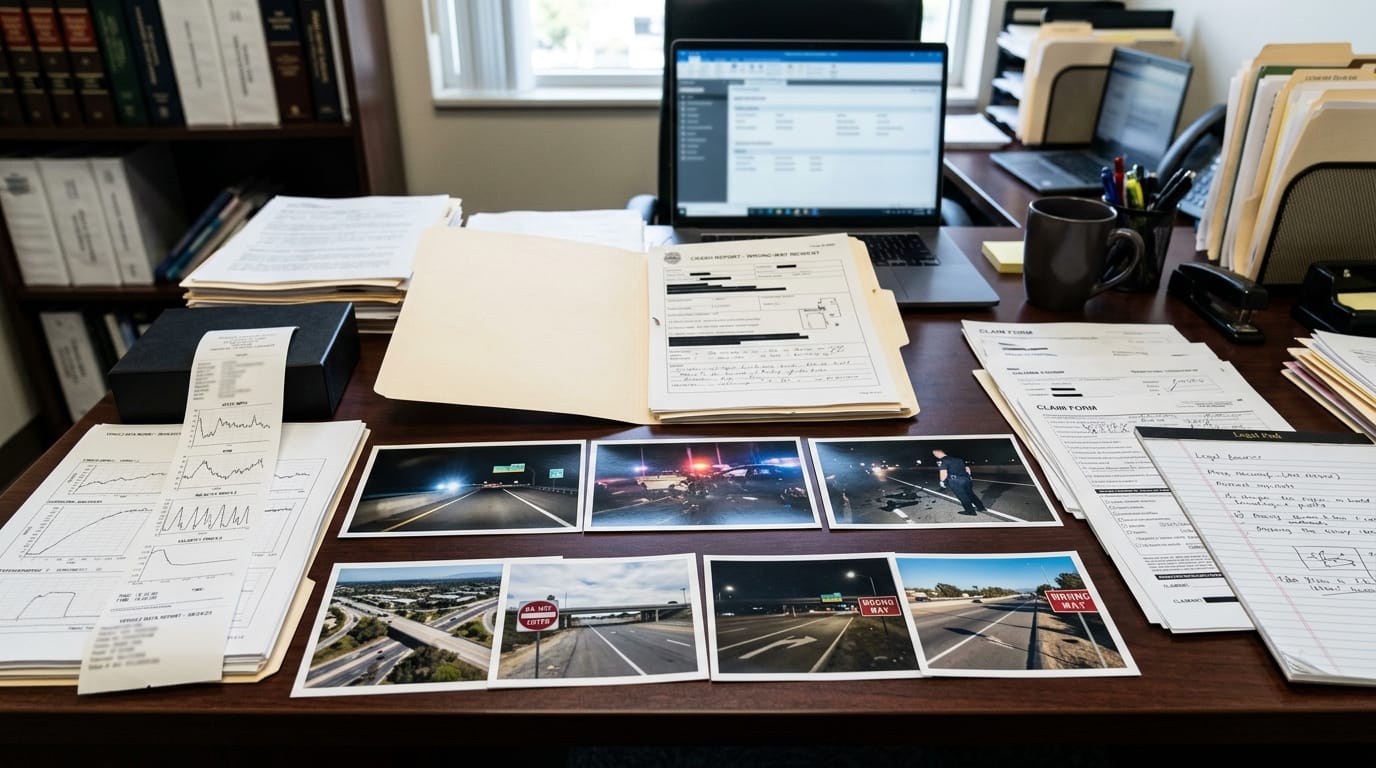
Modern vehicles may store data through event data recorders, telematics systems, onboard cameras, navigation logs, or connected apps. Dashcams may show headlights approaching in the wrong direction. Traffic cameras may show the wrong-way vehicle before the crash. 911 calls may also help establish the timeline.
This connects with Automatic Emergency Braking Accident Claims in 2026. Both topics involve crash timing, braking behavior, vehicle data, and whether safety systems or drivers had enough time to react.
Preserve vehicle data before repair or salvage
Vehicle data can disappear if a car gets repaired, sold, salvaged, or moved without proper preservation. The same risk applies to dashcam files and connected-vehicle data. Some footage overwrites quickly. Some systems need manual download.
Do not rely only on the police report. The report may help, but it may not include every available camera angle or every vehicle-data source. Save photos, videos, repair records, tow-yard details, insurance letters, and witness information as early as possible.
How Victims Can Protect a California Wrong-Way Claim
The first step after any wrong-way crash is emergency care. Call 911, request medical help, and move to safety only if you can do so without making injuries worse. Serious injuries may not feel obvious right away because adrenaline can hide pain.
After medical care, focus on documentation. Get the police report number. Take photos of the vehicles, road marks, airbags, debris, traffic signs, ramp areas, lighting, and nearby cameras. Save dashcam footage. Keep witness names and contact information. If anyone saw the wrong-way vehicle before impact, that person may become extremely important.
NHTSA reports that drunk-driving crashes remain a major national roadway danger. Readers can review the official safety page here: NHTSA drunk driving resources.
Insurance disputes can start even when fault seems obvious
Wrong-way fault may seem clear, but insurance companies can still dispute damages. They may argue that some injuries were pre-existing, treatment was too expensive, the victim recovered quickly, or policy limits are too low. If several people were injured, the available coverage may not fully cover everyone.
Your article on California Underinsured Driver Accident Claims in 2026 is a strong internal link here. A wrong-way crash can cause losses far beyond the at-fault driver’s minimum insurance coverage.
Victims should also consider hit-and-run risks. Some wrong-way drivers flee because they fear arrest, lack insurance, or know they caused severe harm. If that happens, Fatal Hit-and-Run Crashes Are Surging in 2026 can help readers understand why fast evidence collection matters.
Medical records still drive claim value
Strong liability evidence does not replace medical proof. Get evaluated quickly and follow treatment instructions. Keep emergency records, imaging reports, surgery notes, therapy records, prescriptions, work restrictions, and bills.
Wrong-way crashes can cause long recoveries. Victims may deal with pain, mobility limits, driving anxiety, sleep problems, missed work, and future treatment needs. Document those effects. Insurance companies often challenge the value of the claim even when the other driver clearly caused the crash.
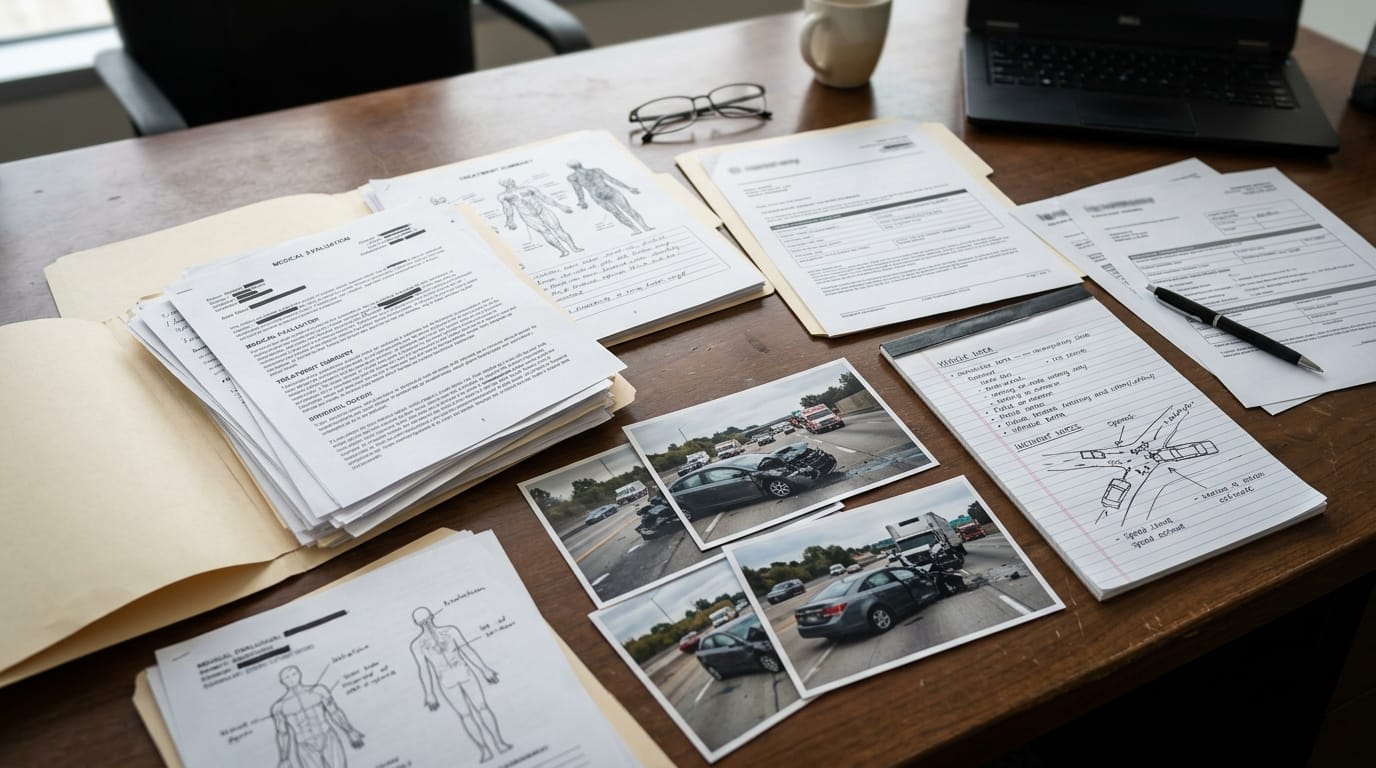
A California wrong-way claim can involve ramp design, DUI evidence, black box data, camera footage, insurance limits, and serious medical proof. The crash may happen in seconds, but the evidence work should begin immediately.
If a wrong-way driver injured you or a loved one, get medical care first. Then preserve video, identify witnesses, document the freeway ramp, protect vehicle data, and keep medical records organized. The stronger the evidence is, the harder it becomes for an insurer to minimize what happened.