California seat belt claims have a new technology angle in 2026. Starting September 1, newly manufactured vehicles covered by federal rules must meet enhanced warning requirements for the driver and front passenger seats.
The change does not rewrite California accident liability law. It does, however, add another source of information that may become relevant after a serious collision. A newer vehicle may contain warning systems, seat occupancy information, event data, or other evidence that helps investigators understand whether occupants were restrained.
That can matter when an insurance company argues that an injured person was not wearing a seat belt or claims that nonuse made the injuries worse.
California law generally requires drivers and passengers age 16 or older to use properly fitted safety belts. Yet a seat belt dispute is different from proving who caused the collision. A driver who runs a red light, rear-ends another vehicle, or crosses into oncoming traffic does not avoid responsibility simply because an occupant’s restraint use later becomes disputed.
This guide explains the new 2026 federal seat belt reminder rule, how seat belt evidence can arise in an injury claim, and what accident victims should preserve before vehicle data or physical evidence disappears.
How the 2026 Seat Belt Reminder Rule Changes New Vehicles
The National Highway Traffic Safety Administration finalized stronger federal seat belt reminder requirements under Federal Motor Vehicle Safety Standard No. 208.
The first major compliance date arrived on September 1, 2026. Newly manufactured covered vehicles must now meet enhanced warning requirements for the driver and front passenger positions.
A separate rear-seat reminder requirement begins on September 1, 2027.
This is a vehicle-manufacturing requirement. It does not mean every older vehicle on California roads suddenly needs to be retrofitted with a new warning system.
Front Passenger Seat Belt Warnings Are Now More Important
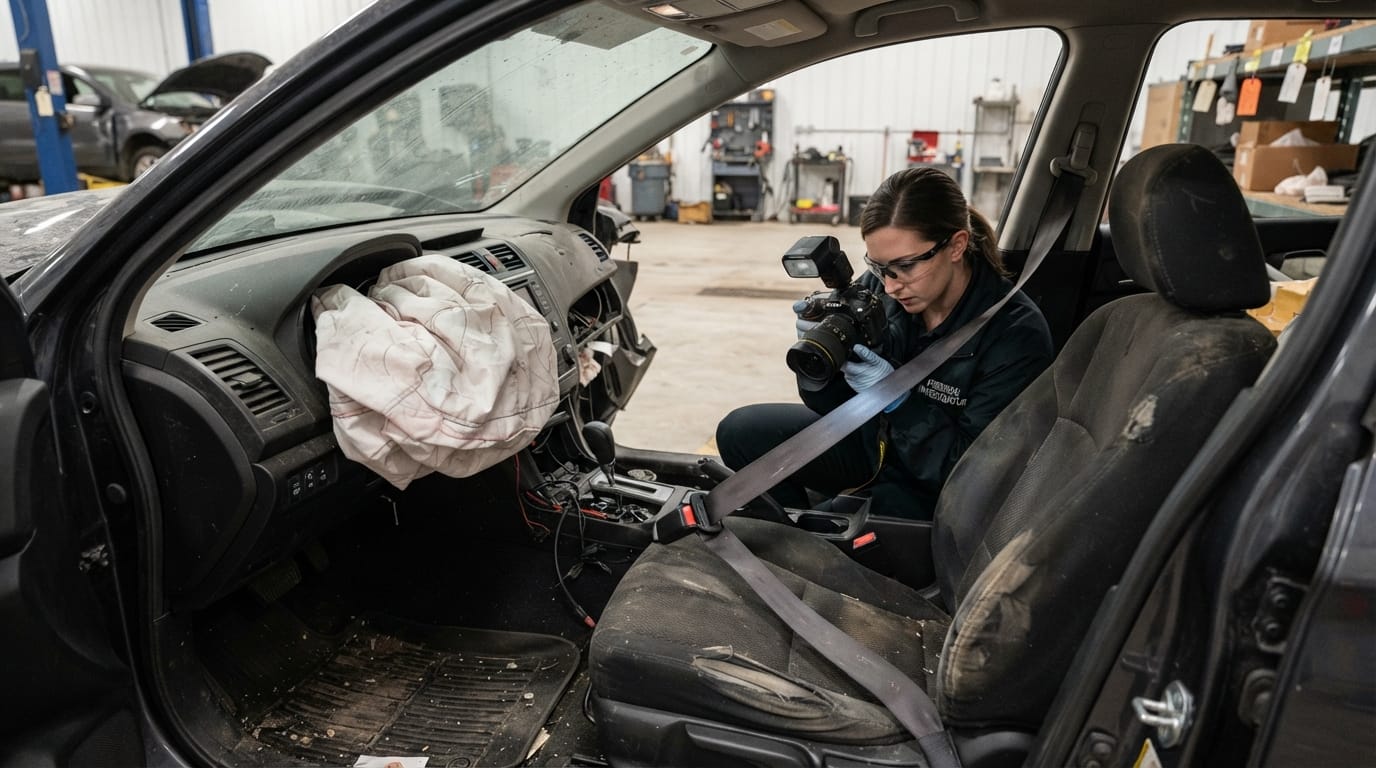
Older federal requirements focused mainly on warning the driver. The updated standard expands the role of seat belt reminders for front passengers.
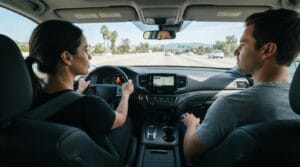
Modern vehicles often use seat occupancy sensors to determine whether someone is sitting in a passenger seat. The vehicle can then use visual and audible alerts when it detects an unbelted occupant.
These systems are designed to encourage people to buckle up before or during travel. They are not designed to determine legal fault after every crash.
Still, the technology may become relevant during an accident investigation. Investigators may want to know whether the vehicle detected an occupant, whether a warning was active, and whether other vehicle data recorded restraint status.
The New Rule Does Not Automatically Apply to Every Car Already on the Road
The September 2026 compliance date applies to newly manufactured vehicles covered by the federal standard. A 2015, 2018, or 2022 vehicle does not automatically receive a new warning system because the rule changed.
That distinction matters when reviewing evidence after a crash.
An insurer should not assume that an older vehicle had the same warning features as a new model. Investigators should identify the vehicle year, trim, restraint system, available sensors, and actual equipment.
The owner’s manual can help explain how the system works. Manufacturer documents may also describe when the warning activates and what conditions can affect passenger detection.
If the crash involved newer safety systems as well, our article on blind-spot detection crash claims in 2026 explains why technology does not replace the driver’s basic duty to operate safely.
A Warning Light Is Not the Same as Proof of Seat Belt Use
A dashboard warning can provide useful context, but accident claims require more than assumptions.
A seat sensor can identify that weight is present in a seating position. A buckle sensor can indicate whether the latch is engaged. Event data from some vehicles may also contain restraint-related information.
However, each vehicle stores different information. A warning system can also have limitations. Objects placed on a passenger seat may affect occupancy detection. Damage during the crash may alter components. A seat belt may be buckled incorrectly or behind an occupant.
That is why investigators should examine all available evidence instead of treating one warning light as the final answer.
Photographs, witness statements, medical records, physical marks on the belt, airbag information, vehicle data, and the occupant’s account may all help establish what happened.
Seat Belt Nonuse Can Affect Damages Without Causing the Crash
This distinction is central to California seat belt claims.
Imagine that Driver A runs a red light and crashes into Driver B. Evidence clearly shows that Driver A caused the collision. Driver A’s insurer later claims that Driver B was not wearing a seat belt.
The seat belt argument does not explain why Driver A entered the intersection against the signal.
Instead, the dispute may focus on whether restraint use could have prevented or reduced particular injuries.
California courts have recognized what is commonly called the seat belt defense. A defendant who raises that issue needs an evidentiary basis connecting the nonuse of an available restraint to the injuries or their severity.
Insurers Should Not Simply Guess That a Seat Belt Would Have Prevented the Injury
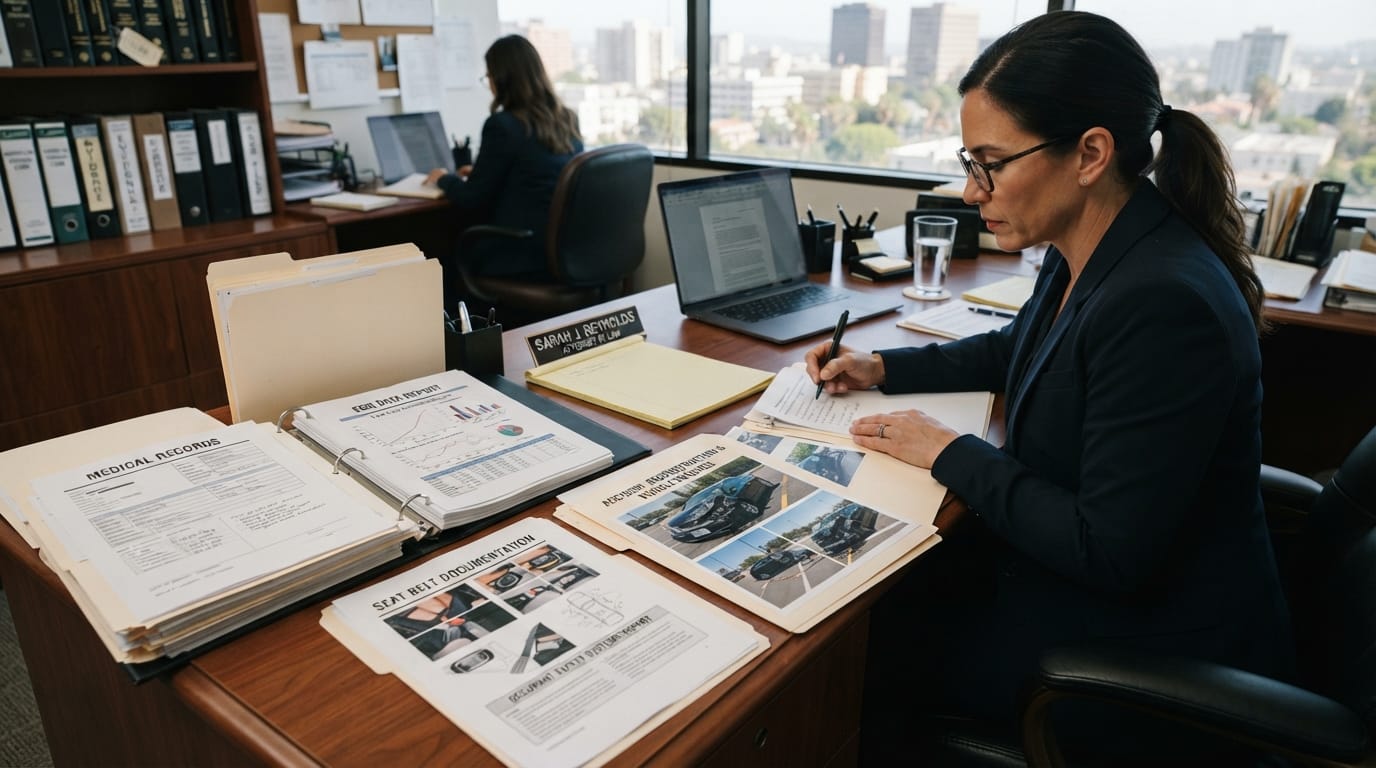
Injury mechanics can be complicated.
A person may suffer a head injury, spinal injury, fracture, abdominal trauma, or shoulder injury during the same collision. It may not be obvious which injuries would have changed if the person had been restrained differently.
California appellate decisions have explained that a defendant needs evidence supporting an argument that seat belt use would have reduced the injuries. Depending on the circumstances, expert testimony may be important.
An insurer should not simply reduce a claim based on a statement such as, “You were not buckled, so half the injuries are your fault.” The medical and accident evidence still matters.
At the same time, accident victims should answer restraint questions accurately. Do not guess if you genuinely cannot remember what happened during a traumatic crash.
Severe collisions happen quickly. Memory can also be affected by concussion, medication, shock, or loss of consciousness.
What to Preserve in a California Seat Belt Injury Claim
Evidence preservation should begin as soon as practical after a serious crash.
Start with medical care. Tell healthcare providers where you felt pain and describe symptoms accurately. Seat belts can sometimes leave bruising or marks across the shoulder, chest, abdomen, or hips after a significant impact.
Those marks may help document restraint use, but their absence does not automatically prove a person was unrestrained.
Save photographs of visible injuries as they develop. Bruising may become more noticeable hours or days after the crash.
Vehicle Data and Physical Restraint Evidence May Both Matter
Photograph the vehicle interior before repairs when possible.
Capture the driver’s seat, passenger seats, buckles, belt webbing, airbags, dashboard, steering wheel, and visible warning indicators. Do not disturb damaged safety components merely to take a better picture.
The vehicle may also contain electronic crash data. Depending on the model, an event data recorder may capture information such as vehicle speed, braking, throttle position, airbag deployment, or restraint status around the time of a crash.
Vehicle data becomes especially important in severe crashes where occupants remember little about the seconds before impact.
Your article on California wrong-way crash claims in 2026 explains why black box and camera evidence can become critical after violent collisions.
Preserve the Vehicle Before Repair or Salvage Changes the Evidence
A damaged vehicle can move through the insurance process quickly.
The insurer may send it to a body shop. A total-loss vehicle may move to a salvage yard. Technicians may remove airbags, replace belts, disconnect batteries, update modules, or dispose of damaged interior components.
Those normal steps can affect evidence.
If restraint performance, seat belt use, an airbag, or another safety system is seriously disputed, consider preserving the vehicle before major changes occur.
Keep towing records, repair estimates, photographs, insurance correspondence, and vehicle identification information.
Also preserve video. Dashcams, nearby businesses, homes, traffic cameras, and other vehicles may have captured the crash. Some systems overwrite recordings quickly.
Medical evidence remains just as important. Keep emergency records, imaging reports, prescriptions, physical therapy notes, work restrictions, bills, and documentation of future treatment.
If the at-fault driver carries limited insurance, severe occupant injuries may create a separate coverage problem. That can be especially important when several people were hurt in the same vehicle or collision.
The same issue appears in catastrophic crashes such as those discussed in our California DUI crash claims guide, where serious injuries can create disputes over medical damages, policy limits, and long-term losses.
warning system
NHTSA’s 2026 seat belt rule gives newer vehicles stronger reminder technology, but technology does not eliminate injury claims or decide fault.
A warning system may help establish context. Event data may help reconstruct the collision. Physical restraint evidence may help explain injury forces.
However, investigators still need to separate two questions: who caused the crash, and whether restraint use affected the injuries.
Those questions are related, but they are not identical.
For California drivers and passengers, the simplest safety rule remains the most important one. Wear the available seat belt correctly on every trip.
After a serious accident, preserve the vehicle, document injuries, save digital evidence, and avoid assuming that a seat belt allegation automatically decides the value of the claim.
You can review the federal changes through the National Highway Traffic Safety Administration’s seat belt reminder rule announcement.
This article provides general educational information and does not constitute legal advice. Seat belt requirements, comparative negligence, insurance coverage, evidence rules, and injury claims depend on the facts of each collision and applicable law.