Drowsy driving accident claims matter more in 2026 because fatigue continues to cause serious crashes that many drivers, insurers, and even police reports fail to fully recognize. A tired driver may drift between lanes, miss a red light, fail to brake, rear-end stopped traffic, or cross into a pedestrian area without reacting in time. The crash may look like ordinary carelessness at first, but fatigue can explain why the driver failed to respond to an obvious danger.
Drowsy driving can affect reaction time, judgment, lane control, attention, and decision-making. A driver does not need to fall completely asleep to become dangerous. Microsleeps, heavy eyelids, delayed braking, poor speed control, and mental fog can all create crash risks. In many injury cases, the challenge is proving that fatigue played a role before the insurance company reduces the claim to a simple “accident.”
Drowsy driving accident claims also connect with other common crash issues. A tired driver may look distracted because they failed to react. A fatigued rideshare or delivery driver may have been working long hours. A driver who dozed off may flee the scene in panic. If several people suffer injuries, limited insurance coverage may create another problem. Readers can also review Accident Advocate’s guides on distracted driving accident claims, hit-and-run accident claims, and underinsured driver accident claims for related claim issues.
Why Drowsy Driving Accident Claims Are Hard to Prove
Drowsy driving accident claims can be difficult because fatigue does not leave behind the same obvious evidence as alcohol or drugs. Police may test for impairment after a major crash, but there is no simple roadside breath test for tiredness. A driver may deny feeling sleepy. An insurance company may argue that fatigue is only speculation. Witnesses may only remember the collision, not the signs that came before it.
That does not mean victims should ignore fatigue. Many drowsy-driving crashes have patterns. A vehicle may drift without braking. The driver may fail to avoid stopped traffic. The crash may happen late at night, early in the morning, after a long shift, or during a long road trip. A driver may admit they were tired at the scene, then change the story later after speaking with an insurer.
The strongest claims use surrounding facts to build the fatigue argument. Work schedules, delivery records, rideshare app history, phone data, fuel receipts, hotel receipts, dashcam footage, traffic cameras, witness statements, and crash reconstruction can all help show whether the driver had been awake too long or failed to stay alert.
Fatigue Often Looks Like Careless Driving
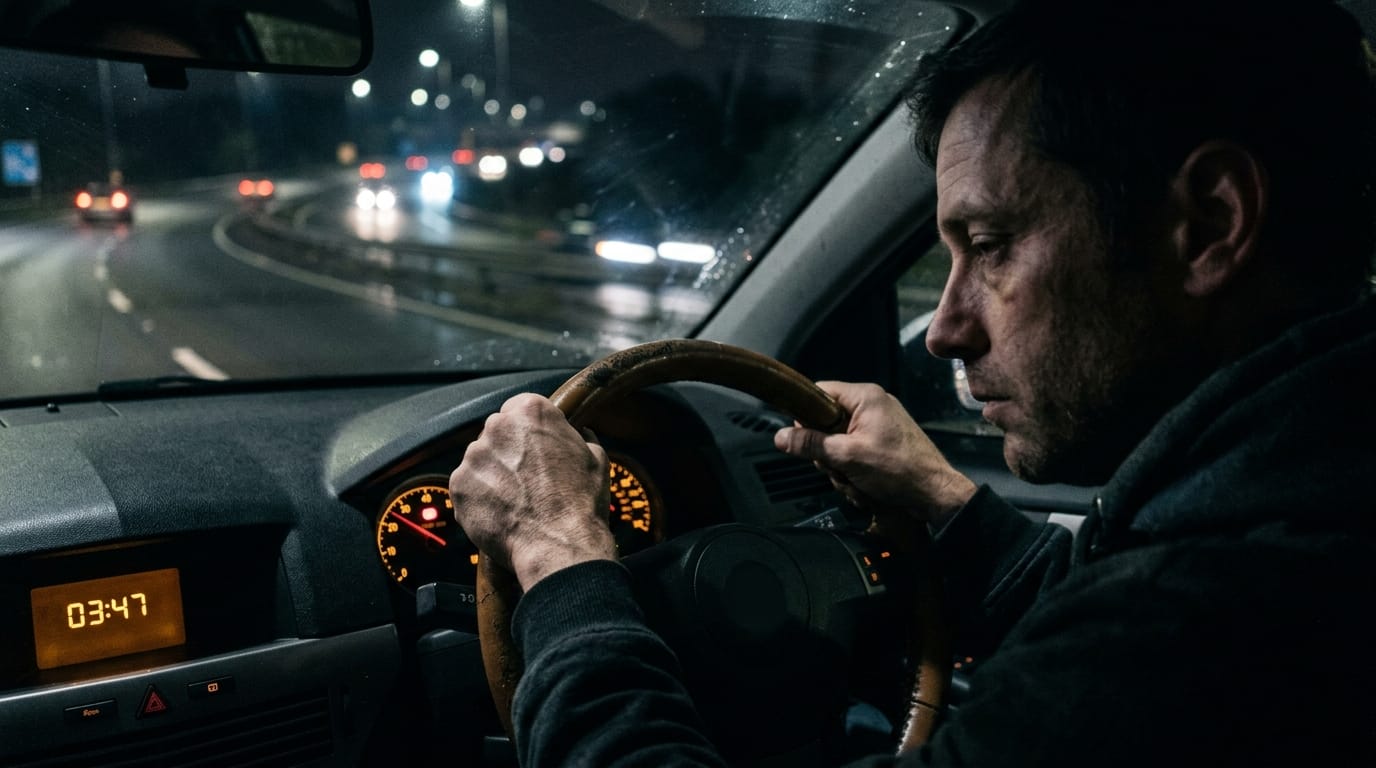
Fatigue often hides behind other labels. A police report may describe unsafe speed, failure to maintain a lane, unsafe turning, failure to yield, or following too closely. Those violations may still matter, but they may not tell the full story. A tired driver may commit those mistakes because they lost alertness before impact.
For example, a rear-end crash at a red light may involve more than distraction. If the driver never braked, drifted across the lane, and had been driving overnight, fatigue becomes a serious issue. A pedestrian crosswalk crash may also raise fatigue questions when the driver turns without reacting to a visible person in the road. Accident Advocate’s article on California pedestrian crosswalk accident claims explains how visibility, driver attention, and fault can affect those cases.
Sleep Loss Is Not an Excuse for Unsafe Driving
A tired driver may say they did not mean to cause harm. That may be true, but it does not erase responsibility. Drivers have a duty to operate their vehicles safely. If someone knows they are exhausted, struggling to stay awake, or unable to focus, they should stop driving, rest, switch drivers, or delay the trip.
In a legal claim, the issue is not whether the driver intended to crash. The issue is whether the driver acted reasonably. Choosing to keep driving while dangerously tired can support a negligence argument, especially when the driver ignored warning signs like yawning, lane drifting, heavy eyes, missed exits, or repeated near misses.
Commercial and Night Drivers May Face Extra Scrutiny
Commercial drivers, delivery drivers, rideshare drivers, and overnight workers may face closer review after a fatigue-related crash. Their schedules, app activity, delivery routes, shift length, and rest breaks may help show whether fatigue played a role. Employers or companies may also matter if they pressured drivers to keep working despite unsafe conditions.
Not every drowsy-driving claim involves an employer. Many involve ordinary drivers returning from a long trip, leaving a night shift, driving home after an event, or pushing through early-morning fatigue. Still, when work demands contribute to the crash, victims should not limit the investigation to the driver alone.
How Victims Can Build a Strong Drowsy Driving Claim
Victims should start with medical care. Neck pain, back pain, headaches, dizziness, numbness, shoulder pain, knee pain, chest pain, anxiety, and sleep problems need prompt attention after a crash. Delayed treatment gives the insurance company an opening to argue that the injuries came from something else. Medical records also help connect the collision to the victim’s pain, treatment, and daily limitations.
After receiving care, victims should focus on evidence. Take photos of vehicle damage, skid marks, debris, traffic signals, lane markings, road lighting, nearby cameras, and final vehicle positions. Save dashcam footage if available. Get witness names and phone numbers. Write down anything the other driver said, especially comments like “I was tired,” “I just got off work,” “I didn’t see you,” or “I must have dozed off.”
Insurance companies may move quickly after a crash, but victims should not rush. A fast settlement can close the claim before the full injury picture becomes clear. That is especially risky when the victim needs follow-up care, imaging, physical therapy, injections, surgery, or time away from work.
Evidence That Can Show Driver Fatigue
Drowsy driving accident claims often depend on indirect evidence. Phone records may show little or no active phone use, which can support the idea that the driver failed to react for another reason. Work records may show a long shift. App logs may show extended rideshare or delivery activity. Gas receipts may show a long overnight trip. Witnesses may describe drifting, slow reaction, or no braking before impact.
Vehicle evidence can also help. A lack of skid marks may suggest the driver did not react in time. Event data may show speed, throttle input, braking, and steering before the crash. Dashcam footage may reveal lane drifting, delayed braking, or repeated near misses. Nearby security cameras may show the vehicle’s path before impact.
School zones and roadside crashes need special attention because fatigue can make drivers miss obvious warnings. A tired driver may fail to slow near children, buses, flashing lights, or stopped vehicles with hazard lights. Related guides on California school zone accident claims and California move-over law accident claims can help readers understand how location and driver duties affect fault.
Insurance Companies May Try to Minimize Fatigue
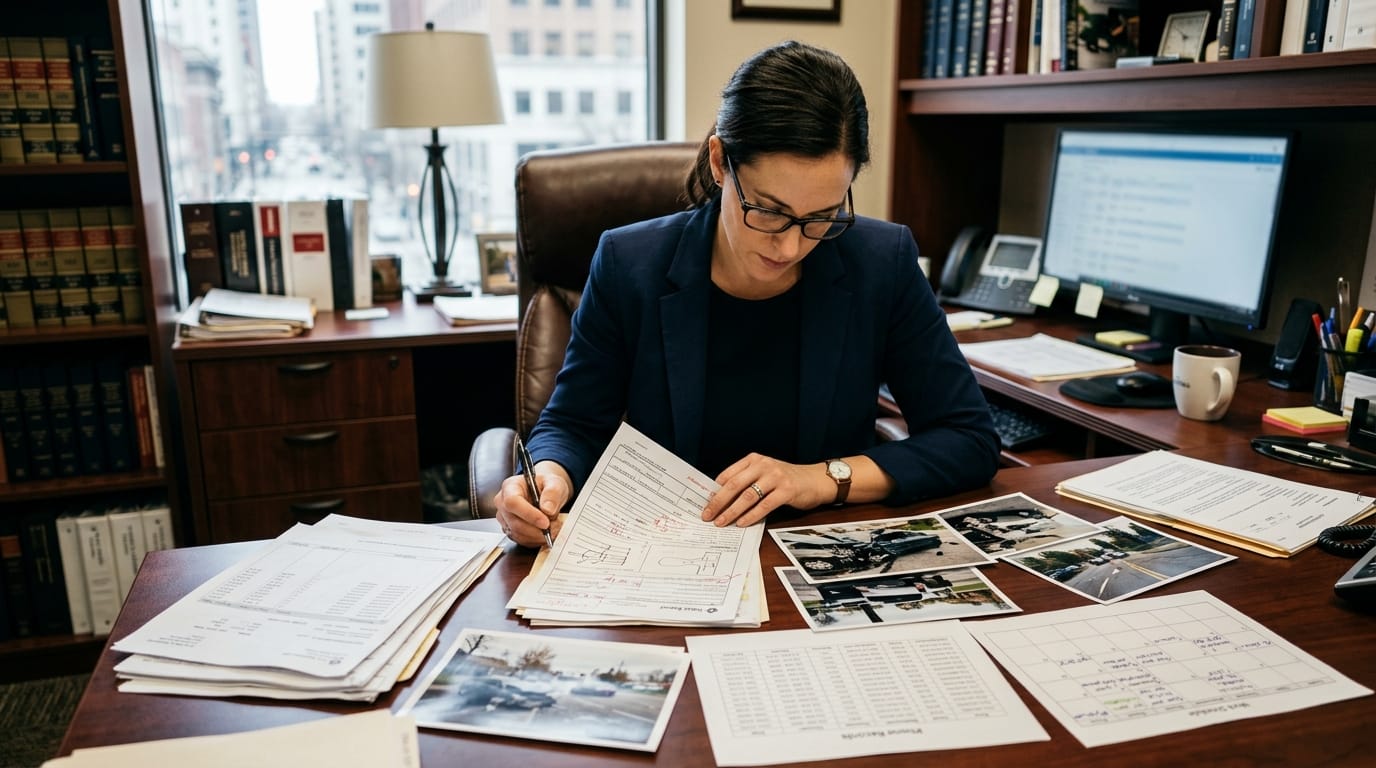
Insurance companies may argue that fatigue cannot be proven. They may blame the victim, call the crash unavoidable, or focus only on the police report. They may also say the driver simply made a mistake, as if that should reduce the value of the claim. Victims should push back with facts.
A strong claim does not need one perfect piece of evidence. It can use several facts together. Time of day, work schedule, driving route, lack of braking, witness statements, video, vehicle data, and driver admissions can create a clear picture. When those facts point to fatigue, the insurer should not ignore them.
What Compensation May Include After a Fatigue-Related Crash
Compensation in drowsy driving accident claims may include emergency care, hospital bills, surgery, medication, physical therapy, chiropractic care, pain management, mental health treatment, lost wages, reduced earning ability, vehicle repair, rental costs, and pain and suffering. The value depends on the injury, the evidence, the available insurance, and the long-term impact on the victim’s life.
Serious fatigue-related crashes can cause head injuries, spinal injuries, fractures, internal injuries, shoulder injuries, knee injuries, and chronic pain. Some victims also deal with anxiety, nightmares, fear of driving, or sleep disruption after the crash. These effects deserve documentation because they can affect claim value.
Drowsy driving accident claims in 2026 require careful investigation because fatigue often hides behind ordinary crash labels. A tired driver may look distracted, careless, or confused, but the real issue may be that they should not have been driving at all. Victims should preserve evidence, document injuries, avoid rushed settlements, and review every possible source of recovery before closing the claim.
Official Safety Guidance Supports the Seriousness of Fatigue
The National Highway Traffic Safety Administration warns that drowsy driving remains difficult to measure and likely underreported. That warning matters in injury claims because insurance companies may treat fatigue as a weak theory when it actually creates a real road danger. Readers can review the official safety resource here: NHTSA drowsy driving guidance.
The bottom line is simple: tired driving is dangerous driving. When fatigue causes a crash, victims should not accept excuses, guesswork, or a quick low settlement. They need evidence that shows what happened, why the driver failed to react, and how the crash changed their life.