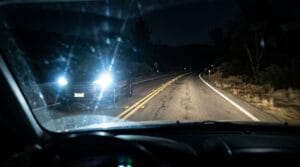
Headlight glare accident claims in 2026 are receiving new attention as federal regulators examine whether modern vehicle lighting standards adequately protect drivers. Bright LED headlights, taller vehicles, improperly aimed lamps, and nighttime visibility problems can create difficult situations on American roads. When a driver becomes temporarily dazzled by an approaching vehicle, identifying the cause of a collision may require more than an ordinary police report.
On October 6, 2026, the National Highway Traffic Safety Administration announced an initiative to modernize Federal Motor Vehicle Safety Standard No. 108. The review includes headlight glare, LED technology, automatic high beams, lamp height, and aiming requirements. Importantly, this announcement begins a regulatory process. It does not establish that every bright headlight is illegal or immediately change accident liability rules.
For injured motorists, glare may become a disputed part of the accident investigation. One driver may report being temporarily blinded, while another may argue that the approaching vehicle was operating normally. Insurance companies may examine lighting conditions, speed, visibility, and driver reactions before deciding fault.
This guide explains how headlight glare affects nighttime driving, when negligence may become relevant, and which evidence can help clarify responsibility after a collision.
Why Headlight Glare Is Becoming a Major Road Safety Discussion in 2026
Modern automotive lighting has changed significantly during the past two decades. LED headlights can produce efficient, concentrated illumination, allowing manufacturers to design distinctive lighting systems. However, the experience of a driver receiving that light can differ from the experience of the driver using it.
The apparent brightness of headlights depends on multiple factors. Beam direction, mounting height, roadway slope, vehicle position, weather, and the driver’s visual sensitivity can influence discomfort and visibility.
A light that appears unusually intense does not necessarily violate a federal standard. Nevertheless, excessive glare can interfere with a motorist’s ability to distinguish pedestrians, lane markings, obstacles, or approaching vehicles.
NHTSA’s October 2026 announcement specifically identifies glare as an issue requiring additional evaluation. The agency intends to consult technical experts, manufacturers, safety organizations, and other stakeholders before determining possible regulatory changes.
How bright LED headlights can affect nighttime visibility
Headlight glare occurs when light entering a driver’s eyes causes discomfort or reduces the ability to perceive important visual details. Two related concepts are commonly discussed: discomfort glare and disability glare.
Discomfort glare describes the unpleasant sensation caused by a bright light source. Disability glare concerns reduced visual performance resulting from light scattering within the eye.
These effects can become particularly concerning on two-lane roads where approaching vehicles travel close to opposing traffic. A driver may struggle to identify the road edge or an object immediately after encountering intense light.
However, not every nighttime accident involving bright headlights is caused by glare. Investigators must distinguish the driver’s perception from measurable roadway conditions and other contributing factors.
Why taller SUVs and trucks may create different glare conditions
Headlamp mounting height influences the direction from which light reaches other road users. Because trucks and SUVs may have higher-mounted headlights than smaller passenger cars, vehicle geometry can affect the perceived intensity of an approaching beam.
Roadway elevation also matters. A vehicle traveling over a hill or uneven surface can temporarily direct its headlights toward another driver’s eyes even when its equipment is properly maintained.
NHTSA’s current review includes the influence of headlamp height and aiming. That focus reflects the need to evaluate actual lighting performance rather than assuming that one type of vehicle is automatically defective.
Crash investigators may consider vehicle specifications, suspension modifications, headlamp alignment, and the surrounding roadway when assessing glare complaints.
Improper headlight alignment and aftermarket modifications
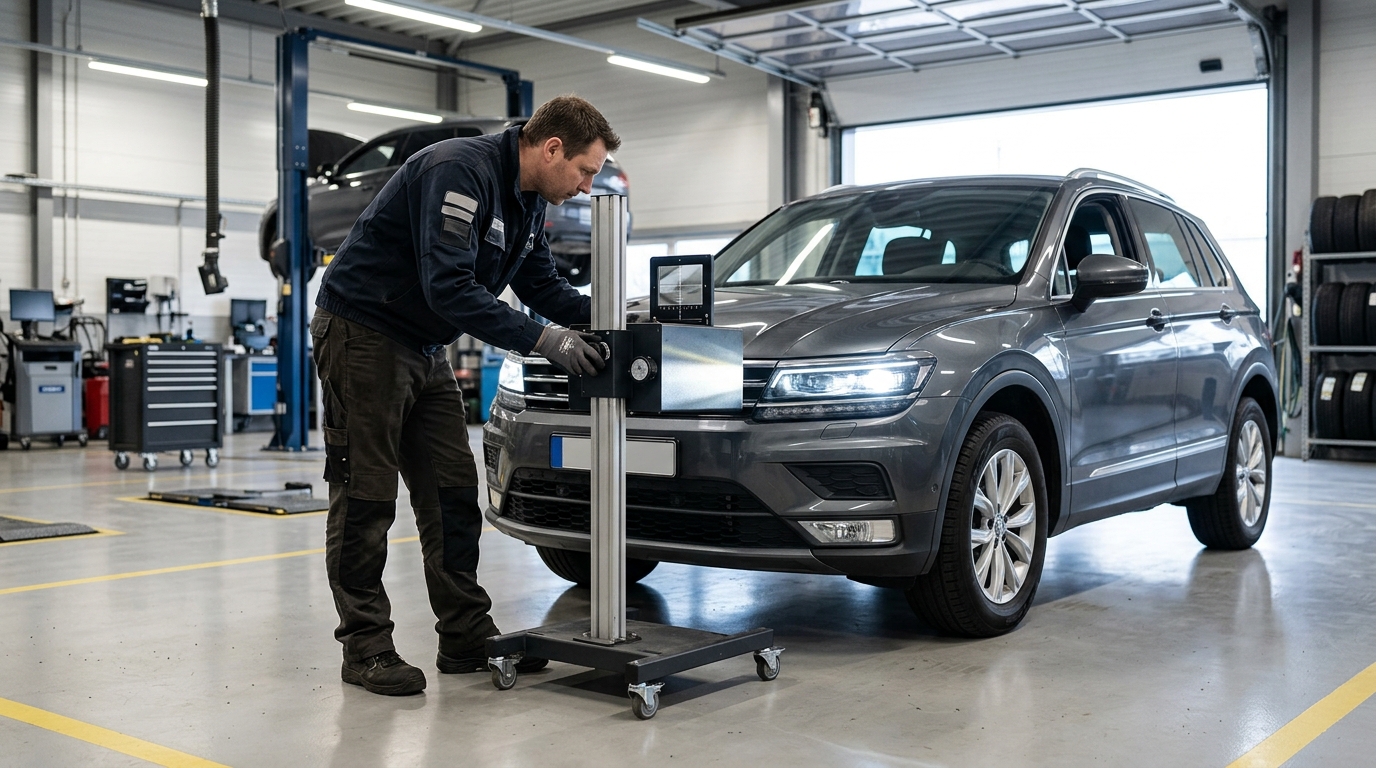
Headlights can become misaligned after repairs, collisions, suspension changes, or improper installation. Some aftermarket lighting modifications may also alter the intended beam pattern.
For example, installing a replacement light source in a housing not designed for that configuration can change how illumination is distributed. Whether a particular modification complies with federal or state requirements depends on the equipment and applicable rules.
Vehicle maintenance records, repair invoices, photographs, and technical inspections may help establish whether a lighting system was functioning as intended.
Still, unusual brightness alone does not establish that the equipment caused an accident. Evidence must connect the lighting condition to the driver’s loss of visibility and subsequent collision.
Can headlight glare contribute to driver negligence?
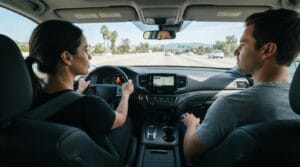
Negligence generally involves failing to exercise reasonable care under the circumstances. In California, drivers must operate vehicles at speeds appropriate for traffic, visibility, weather, and roadway conditions.
California Vehicle Code Section 22350 establishes the basic speed law. A motorist may need to slow down when nighttime visibility becomes limited, even if the posted speed limit is higher.
Imagine a driver encountering intense headlights on a dark roadway. The driver becomes uncomfortable, continues at the same speed, and fails to notice a stopped vehicle ahead. Investigators may need to evaluate both the source of the glare and whether the driver responded reasonably.
Another motorist’s lighting equipment may be relevant, but it does not automatically excuse unsafe speed, distraction, or failure to maintain control.
Why claiming temporary blindness does not automatically eliminate fault
After a nighttime collision, a driver may explain that approaching headlights prevented them from seeing the road. This statement may be important, but it is not conclusive evidence about liability.
Investigators should examine where the vehicles were located, whether high beams were activated, the available sight distance, and how the driver responded.
Other factors may include fatigue, impaired driving, windshield condition, prescription eyewear, or mobile phone use.
Our article on blind-spot detection crash claims in 2026 discusses a related legal principle: driver-assistance technology does not automatically remove the motorist’s responsibility to operate safely.
The same reasoning applies to lighting technology. A vehicle may meet applicable equipment standards while its driver remains responsible for dangerous conduct.
How to Prove Liability After a Headlight Glare Accident
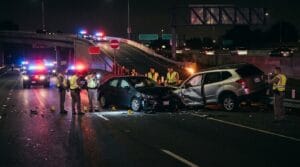
Nighttime collisions can be difficult to reconstruct because lighting conditions change quickly. Vehicles are moved, emergency lights appear, and investigators may arrive after the original traffic conditions have disappeared.
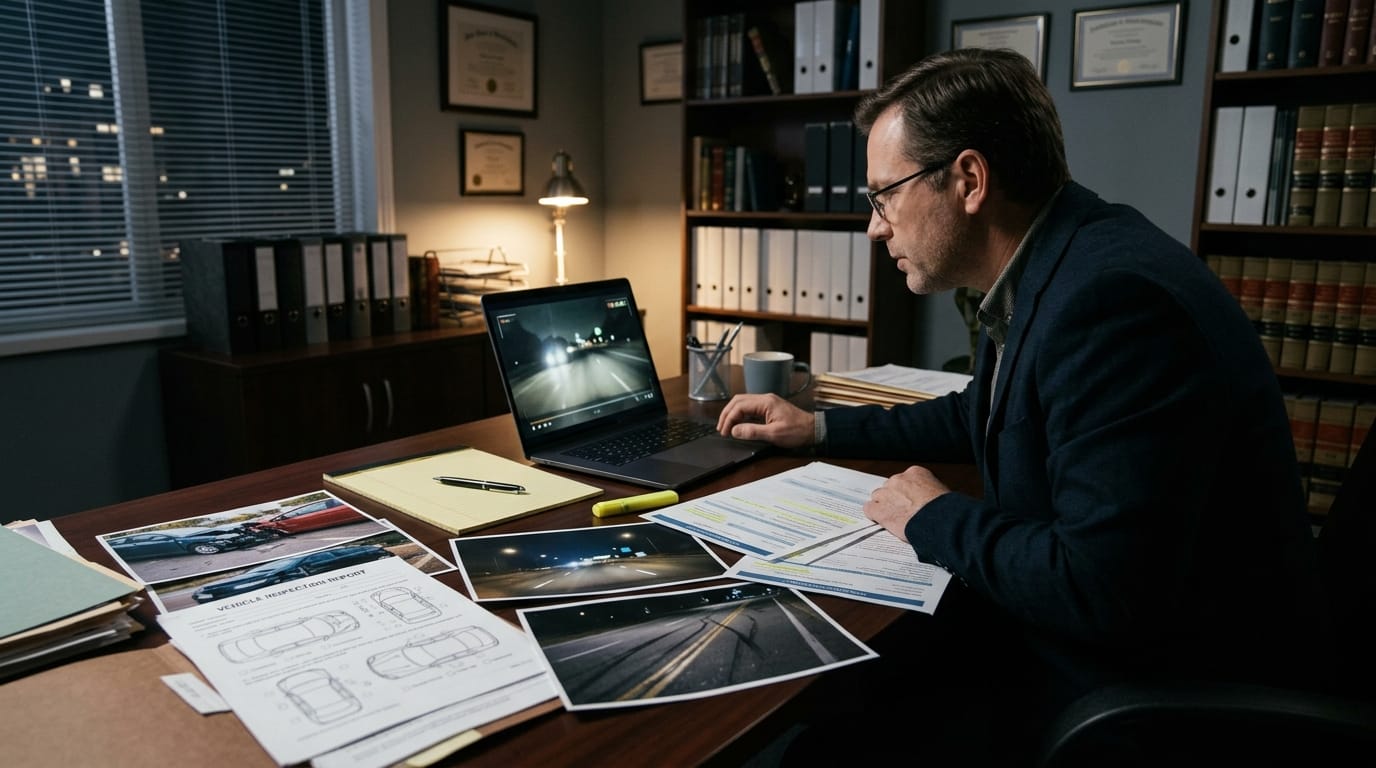
Preserving evidence early can help establish whether headlight glare contributed to an accident. Useful materials may include dashcam footage, vehicle photographs, witness statements, crash reports, lighting inspections, and roadway measurements.
Medical records are equally important when a collision causes injuries. Head trauma, fractures, spinal injuries, and other conditions may require emergency treatment and follow-up care.
An injured person should prioritize medical attention and personal safety before attempting to gather evidence near moving traffic.
Dashcam footage, vehicle inspections, and nighttime crash reconstruction
Dashcams may help identify the approximate position of approaching vehicles, timing of a collision, and surrounding traffic. However, camera sensors do not reproduce human vision perfectly.
Exposure settings, lens flare, image processing, and recording quality can make headlights appear brighter or darker than they looked to the driver.
Therefore, video should be interpreted carefully. Technical experts may need to compare camera characteristics, vehicle lighting specifications, roadway geometry, and other evidence.
Some vehicles also contain event data recorders that may store selected information about speed, braking, or driver inputs during qualifying crash events.
The availability of these records depends on the vehicle and circumstances. They should not be assumed to exist in every accident.
What accident victims should preserve before evidence disappears
When safe, document the vehicles, roadway, streetlights, traffic signs, weather conditions, and surrounding environment. Photographs taken from the approximate direction of travel may help show sightlines.
Keep witness contact information and identify nearby businesses that might have surveillance cameras. Recordings can be overwritten or deleted during normal system operation.
If a vehicle’s headlights are disputed, preserve relevant equipment and repair information before major modifications or salvage disposal occur.
Do not attempt unsafe roadside lighting experiments or inspect damaged electrical components without professional assistance.
Accident reconstruction specialists may need controlled measurements to evaluate headlamp performance reliably.
California generally applies comparative negligence principles. More than one person may share responsibility if multiple actions contributed to the collision.
For example, a driver with improperly aimed headlights may contribute to visibility problems, while another motorist may also have been speeding or distracted.
Determining legal responsibility requires evidence connecting those actions to the actual crash.
Our guide to California wrong-way crash claims in 2026 explains how roadway conditions, vehicle information, and driver behavior can combine in complex accident investigations.
Insurance coverage is another consideration. California’s standard minimum automobile liability limits increased in 2025 to $30,000 per injured person, $60,000 per accident involving multiple injured people, and $15,000 for property damage.
Severe nighttime collisions can create losses exceeding those minimum amounts. The availability of additional coverage depends on the policies and parties involved.
Accident victims may also encounter disputes concerning whether the collision was unavoidable. An insurance company’s initial interpretation is not necessarily the final determination of liability.
authoritative information
Medical expenses, lost earnings, rehabilitation costs, property damage, and qualifying non-economic losses may become relevant when evaluating a personal injury claim.
However, compensation depends on liability, causation, documented damages, applicable insurance, and any relevant legal defenses.
Under California Code of Civil Procedure Section 335.1, many personal injury lawsuits generally have a two-year filing deadline. Exceptions and shorter procedures may apply, particularly to claims involving public entities.
For another perspective on evidence preservation, see our article on California seat belt claims and new federal warning technology. It explains why vehicle information should be interpreted alongside medical and physical evidence rather than treated as an automatic answer.
For authoritative information on the latest lighting review, consult the NHTSA announcement on modernizing vehicle lighting standards, published October 6, 2026.
The agency has also invited public participation in the rulemaking process, with comments and membership applications due November 9, 2026.
While federal standards may evolve, practical driving precautions remain important today. Drivers should maintain clean windshields, keep headlights properly aimed, avoid unnecessary high-beam use, and reduce speed when visibility becomes difficult.
When encountering bright oncoming lights, avoid staring directly at the source. Focus on maintaining a safe roadway position and slowing appropriately rather than making sudden steering movements.
Headlight glare accident claims in 2026 highlight the connection between vehicle technology, road safety, and driver responsibility.
The federal review creates a timely opportunity to discuss lighting performance, but it does not establish automatic liability against drivers or manufacturers.
Each collision requires an investigation of vehicle condition, visibility, driver conduct, injury evidence, and applicable legal requirements.
Disclaimer: This article provides general educational information and does not constitute legal advice. Accident liability, equipment compliance, insurance coverage, and filing deadlines depend on the circumstances and applicable law.